Today's
EarthStation1.com 15% Off Commemorative Memorial Title: TV
Commercials: The Classics Vol. 5 DVD, Video Download, USB Drive
Today, November 16, 2025
November 16: National Fast Food Day: -- A
day for food lovers get a dose of their favorite convenience food!
Whether they use the drive-thru, dine-in, or get it to go,
National Fast Food Day calls us to grilled, fried, and broiled
menu staples. First popularized in the United States in the 1950s,
fast food is considered any meal with low preparation time and
served to a customer in a packaged form. The meal makes for quick
dine-in, take-out or take-away. Most fast-food restaurants offer
drive-thru service. Merriam-Webster dictionary first recognized
the term "fast food" in 1951. Following World War I,
automobiles became popular and more affordable. At that time,
restaurants introduced the drive-in. Much like today's food
trucks, Walter Anderson first began selling hamburgers out of an
old streetcar body at a Wichita intersection. Despite the limited
menu, the hamburgers were a crowd-pleaser. When the popularity of
his hamburgers grew, Anderson partnered with E.W. Ingram and
opened the first White Castle in 1921 in Wichita, Kansas. These
enterprising restauranteurs opened the first fast-food business,
selling hamburgers for .05 USD each. The United States hosts the
largest fast food industry in the world. American fast-food
restaurants are located in over 100 countries. While fast food
began as sandwiches and sides, the menus expanded over time. Today
fast food includes fish, a variety of fried chicken, tacos, pizza,
and a wide selection of sides. Sodas quench the thirst and
desserts sweeten the menu. From ice cream and shakes to pies and
cakes, fast food delivers. As times changed, restaurants added
breakfast items to the menu, too. Expanding their hours increased
their workforce and their menu options, as well. To observe
National Fast Food Day, invite a group out to your favorite
fast-food restaurant. Share some rings and a shake. Do you prefer
breakfast or lunch? No matter which one you prefer you can get it
to go to make it faster, too! Give a shoutout to your favorite
fast-food restaurant using #NationalFastFoodDay to post on social
media. On Sale @ 15% Off Discount Till Midnight PT!
https://store.earthstation1.com/tv-commercials-the-classics-vol-5-dv5.html
Today's
EarthStation1.com 15% Off Commemorative Memorial Title: Mahatma
Mohandas Gandhi Documentaries DVD MP4 Download USB Drive
Today, November 16, 2025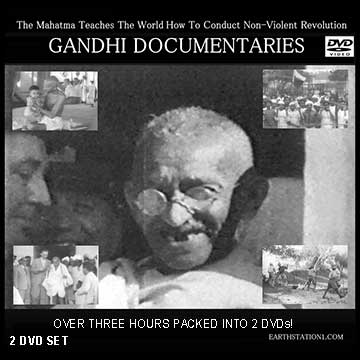
November 16: International Day Of
Tolerance: -- A great opportunity for you to think back and recall
the last time you had a different perspective than one of your
friends? When's the last time you've had to learn something about
someone else's culture? We're betting it wasn't that long ago.
Look and learn the date that celebrates open-mindedness and
listening. It was started by the UN General Assembly, with the
goal of getting educational institutions and the general public to
see tolerance as a staple of society. And it came after the United
Nations declared a Year for Tolerance in 1995. In 1995, UNESCO
created the Declaration of Principles on Tolerance as a way to
define and provide awareness of tolerance for any and all
governing and participating bodies. That day in 1995 was November
16. Now, as an anniversary of that Declaration, we celebrate the
International Day for Tolerance every November 16 to help spread
tolerance and raise awareness of any intolerance that may still be
prevalent in the world today. Although we should be tolerant every
day, it's always good to have one occasion to remind us just how
important tolerance is. Additionally, UNESCO created an award to
recognize those with great achievements in promoting the spirit of
tolerance or non-violence in fields such as science, culture, and
the arts. The UNESCO-Madanjeet Singh Prize and the UNESCO
International Day for Tolerance both recognize that tolerance is a
universal human right. On Sale @ 15% Off Discount Till Midnight
PT!
https://store.earthstation1.com/mahatma-mohandas-gandhi-nonviolent-revolution-biography-dvd.html
Today's
EarthStation1.com 15% Off Commemorative Memorial Title: Dispelling
Witches: What Witchcraft Is + Salem Witch Trials MP4 DVD
Today, November 16, 2025
November 16: The Night Of Hekate
(Sunset-Sunset): -- A celebration of when mystery and ancient
traditions intertwine beneath the moon's watchful gaze,
celebrating the enigmatic spirit of the night. The first
appearance of Hekate (more commonly spelled "Hecate" in
English; pronounced "HEHK-ee-tee") in Greek mythology
comes in the tale of Persephone, when Persephone is abducted by
Hades and her mother needs help finding her. Hekate leads the
mother through the underworld to find her daughter. Though the
myth goes on to even offer an explanation for the beauty of
spring, Hekate's role is that of guide and protector. And The
Night of Hekate is here to reveal more about her! Each year - at
the beginning of sunset on this autumn evening and for twenty-four
hours until sunset on the next day - Hekate is paid respect and
honor. Sometimes spelled "Hecate", this Greek goddess is
associated with various types of witchcraft, magic, childbirth and
the underworld. Some followers connect Hekate with the practice of
necromancy or communicating with those who have already died.
Hekate's origins in Greek mythology pay her tribute as a triple
moon goddess which includes the three aspects of maiden, mother
and crone and giving her power over the heavens, the earth and the
sea. Some people would also consider Hekate to be a goddess of
transitions or crossroads and, because of this, many relate her
with protecting those who are marginalized, oppressed, or caught
in-between, as Persephone was. The time of Hekate occurs during
the Dark Moon, which represents the release of old things and
renewal. In Ancient times, the Night of Hekate was a time when the
followers of this goddess would traditionally gather to bring
offerings of food, wine and various other items that hold personal
significance for their Hekate Suppers. These might have included
honey, eggs, garlic, fish, mushrooms, or pastries and bread made
in the shape of crescent moons. People who are interested in Greek
mythology, magic or witchcraft may mark The Night of Hekate with
various rituals. One ritual for Night of Hekate might include
consuming some of the food brought as offerings, including wine,
mushrooms, breads and more. Some participants might also choose to
leave these foods on the threshold of the front door, to symbolize
the idea of a "crossroads" between the indoors and the
outdoors, or on an actual public crossroad. Some people are
motivated on the Night of Hekate to consider their own transitions
or crossroads, or those of their loved ones. This might be a good
time to write a poem, create a piece of artwork, or write a letter
that expresses desire and intention for a time of transition. As
this night appears in late autumn, while the days are getting
shorter and darker, it might also be a good time to plan ahead and
set intentions for ways to be creative in the coming months of
winter. A great way to get involved with The Night of Hekate might
be to learn more about Hekate's role in Persephone's story, as
well as various other stories from Greek mythology. Try learning
more about her other associations who included Artemis, Demeter,
and Selene. On Sale @ 15% Off Discount Till Midnight PT!
https://store.earthstation1.com/dispelling-witches-what-is-amp-isn39t-witchcraft-mp4-video-download-394.html
Today's
EarthStation1.com 15% Off Commemorative Memorial Title: The Incas
Remembered: Historical Documentary DVD, MP4, USB Stick
Today, November 16, 2025
November 16, 1532: The Spanish
Colonization Of The Americas: Indigenous Rebellions In Mexico And
Central America: The Spanish Conquest Of The Inca Empire (The
Conquest Of Peru): The Battle Of Cajamarca (The Massacre Of
Cajamarca): -- By the command of Francisco Pizarro, a small force
of Spanish conquistadors of just 110-foot soldiers, 67 cavalry,
three arquebuses and two falconets led by Hernando Pizarro and
Hernando de Soto met the day prior Inca Empire leader Atahualpa
for the first time in his camp outside Cajamarca, arranging a
"meeting" in his Cajamarca plaza fortress the following
day November 16 that became known as The 'Battle' Of Cajamarca.
There Fray Vincente de Valverde and native interpreter Felipillo
approached Atahualpa in Cajamarca's central plaza, and after the
Dominican friar expounded the "true faith" and the need
to pay tribute to the Emperor Charles V, Atahualpa replied, "I
will be no man's tributary." His decision, based on there
being fewer than 200 Spanish forces as opposed to his 50,000-man
army, 6,000 of which accompanied him to Cajamarca, sealed his
fate, and that of the Inca empire. Pizarro and his forces
responded to Atahualpa's refusal with an attack the Inca army that
became The Battle Of Cajamarca, also spelled Cajamalca, though
many contemporary scholars prefer to call it The Massacre Of
Cajamarca. The Spanish killed Atahualpa's 12-man honor guard and
thousands of Atahualpa's counselors, commanders, and unarmed
attendants in the great plaza of Cajamarca, took Atahualpa captive
at the so-called Ransom Room, and caused his armed host outside
the town to flee. The capture of Atahualpa marked the opening
stage of the conquest of the pre-Columbian civilization of Peru.
Atahualpa was executed by the Spanish on July 26, 1533, and buried
on August 29, 1533. Atahualpa's wife, 10-year-old Cuxirimay Ocllo
Yupanqui, was with Atahualpa's army in Cajamarca and had stayed
with him while he was imprisoned. Following his execution, she was
taken to Cuzco and given the name Dona Angelina. By 1538, it was
known she had borne Pizarro two sons, Juan and Francisco. The
Spanish Conquest Of The Inca Empire, also known as Conquest Of
Peru, was one of the most important campaigns in the Spanish
colonization of the Americas. After years of preliminary
exploration and military skirmishes, 168 Spanish soldiers under
conquistador Francisco Pizarro, his brothers, and their native
allies captured the Sapa Inca Atahualpa in the 1532 Battle of
Cajamarca. It was the first step in a long campaign that took
decades of fighting but ended in Spanish victory in 1572 and
colonization of the region as the Viceroyalty of Peru. The
conquest of the Inca Empire (called "Tahuantinsuyu" or
"Tawantinsuyu" in Quechua, meaning "Realm of the
Four Parts"), led to spin-off campaigns into present-day
Chile and Colombia, as well as expeditions towards the Amazon
Basin. On Sale @ 15% Off Discount Till Midnight PT!
https://store.earthstation1.com/the-incas-remembered-historical-documentary-dvd-mp4-us4.html
Today's
EarthStation1.com 15% Off Commemorative Memorial Title: St. Louis
Blues 1958 Nat King Cole + Bonus W. C. Handy Tribute DVD MP4
Today, November 16, 2025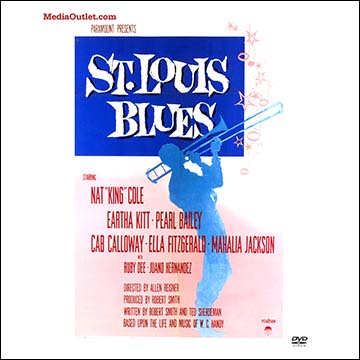
November 16, 1873: #BOTD: #HBD! W. C.
Handy, African American trumpet player and composer known as the
"Father Of The Blues" (d. March 28, 1958) is #born
William Christopher Handy in Florence, Alabama, the son of
Elizabeth Brewer and Charles Barnard Handy. His father was the
pastor of a small church in Guntersville, a small town in
northeast central Alabama. Handy wrote in his 1941 autobiography
Father Of The Blues that he was born in a log cabin built by his
grandfather William Wise Handy, who became an African Methodist
Episcopal minister after the Emancipation Proclamation. The log
cabin of Handy's birth has been preserved near downtown Florence.
William Christopher Handy is one of the most influential American
songwriters. He was one of many musicians who played the
distinctively American blues music, and he is credited with giving
it its contemporary form. Handy did not create the blues genre and
was not the first to publish music in the blues form, but he took
the blues from a regional music style (Delta blues) with a limited
audience to one of the dominant national forces in American music.
Handy was an educated musician who used elements of folk music in
his compositions. He was scrupulous in documenting the sources of
his works, which frequently combined stylistic influences from
various performers. W. C. Handy died of bronchial pneumonia at
Sydenham Hospital in New York City, aged 84. Over 25,000 people
attended his funeral in Harlem's Abyssinian Baptist Church. Over
150,000 people gathered in the streets near the church to pay
their respects. He is buried in Woodlawn Cemetery in the Bronx,
New York. On Sale @ 15% Off Discount Till Midnight PT!
https://store.earthstation1.com/st-louis-blues-1958-dvd-nat-king-cole-eartha-1958.html
Today's
EarthStation1.com 15% Off Commemorative Memorial Title: Fibber
McGee And Molly Complete Radio Series MP3 DVD, Download, USB
Today, November 16, 2025
November 16, 1896: #BOTD: #HBD! Jim
Jordan, American actor who played Fibber McGee in Fibber McGee and
Molly, one of radio's most popular radio series, and voiced the
albatross Orville in Disney's The Rescuers (1977) (d. April 1,
1988) is #born James Edward Jordan on a farm near Peoria,
Illinois. He attended St. John's Church in Peoria, and his family
eventually sold the farm and moved into Peoria. It was at church
choir practice that he met Marian Driscoll, whom he married on
August 31, 1918. Jim Jordan went on the vaudeville circuit, both
as a solo act and with his wife, Marian, at various times until
1924. They went entirely broke in 1923, having to be wired money
by their parents to get back to Peoria from Lincoln, Illinois. Jim
and Marian Jordan got their major break in radio while performing
in Chicago in 1924; Jim said he could give a better performance
than the singers they were listening to on the radio, and his
brother Byron bet 10 USD that Jim couldn't do it. By the end of
the evening, Jim and Marian had their first radio contract, at 10
USD per show for 26 weeks as The O'Henry Twins, sponsored by Oh
Henry! candy. The Jordans would work as a double act for the
remainder of their careers, seldom appearing separate from each
other, with Jim as the comic foil and Marian as the stooge. From
1931 to 1935, they produced the low-budget sitcom Smackout, in
which they portrayed most of the characters (including
semi-fictional versions of themselves). In 1935, the couple, along
with head writer Don Quinn, teamed up to create Fibber McGee and
Molly, a weekly sitcom that was given a larger budget and an
ensemble cast. Fibber McGee and Molly ran as a weekly series until
1953. In addition to the general decline of scripted radio and the
concurrent rise of television, Marian's health was beginning to
fail. The show would transition to a pre-recorded daily sitcom
from 1953 to 1956, then to a short-form weekly series (under the
name Just Molly and Me) for Monitor from 1957 to 1959. In 1959,
Fibber McGee and Molly was finally adapted for television, after
years of resistance. Marian was too ill to continue, and for
reasons unexplained (nothing in the radio series had identified
the age of either of the McGees), neither Jim nor Don Quinn (nor
Quinn's successor as head writer of the radio show, Phil Leslie)
transitioned to the new series; new writers were brought in, and
both the McGees were recast. The television version of Fibber
McGee and Molly, with Bob Sweeney as Fibber, was a critical and
commercial failure. Marian Jordan died in April 1961. Jim Jordan
married Gretchen Stewart (1909-1998), the widow of radio comic
Harry Stewart (Yogi Yorgesson) in 1962; they remained married for
the rest of his life, and he remained in semi-retirement, other
than a brief comeback in the mid-1970s when Jordan appeared in an
episode of Chico and the Man, did voice work for The Rescuers and
appeared in a public service announcement for AARP. In March 1988,
Jordan fell down at his home and suffered a major stroke. Left
comatose for over a week, he never regained consciousness and died
on April 1. His death came shortly before voice actors were being
hired for The Rescuers Down Under; in acknowledgement of Jordan's
death, Roy E. Disney wrote his character out of the script (John
Candy would play the character's brother instead). He is buried
next to Marian Jordan in the Saint Ann section of Holy Cross
Cemetery, Culver City, and is next to the plot of Sharon Tate. On
Sale @ 15% Off Discount Till Midnight PT!
https://store.earthstation1.com/fibber-mcgee-and-molly-mp3-dvd-complete-radio-serie3.html
Today's
EarthStation1.com 15% Off Commemorative Memorial Title: The March
Of Time Newsreel Set 1933-46 All 3 TV Series DVD, MP4, USB
Today, November 16, 2025
November 16, 1896: #BOTD: Oswald Mosley,
English politician, orator, anti-Semite and fascist leader who
rose to fame in the 1920s as a Member of Parliament and later in
the 1930s, having become disillusioned with mainstream politics,
as the leader of the British Union of Fascists (BUF) (d. December
3, 1980) is #born Oswald Ernald Mosley at 47 Hill Street, Mayfair,
Westminster. He was the eldest of the three sons of Sir Oswald
Mosley, 5th Baronet (1873-1928), and Katharine Maud
Edwards-Heathcote (1874-1950), daughter of Captain Justinian H.
Edwards-Heathcote of Apedale Hall, Staffordshire. Sir Oswald
Ernald Mosley, 6th Baronet, had not been knighted, but he was the
sixth baronet of the Mosley baronets, one of three baronetcies
created for members of the Mosley family, with a title that had
been in his family for more than a century at his father's death
on 21 September 1928. After military service during the First
World War, Mosley was one of the youngest Members of Parliament,
representing Harrow from 1918 to 1924, first as a Conservative,
then an independent, before joining the Labour Party. At the 1924
General Election he stood in Birmingham Ladywood against future
Prime Minister Neville Chamberlain, coming within 100 votes of
beating him. Mosley returned to Parliament as Labour MP for
Smethwick at a by-election in 1926 and served as Chancellor of the
Duchy of Lancaster in the Labour Government of 1929-31. He was
considered a potential Labour Prime Minister but resigned due to
discord with the Government's unemployment policies. He chose not
to defend his Smethwick constituency at the 1931 general election,
instead unsuccessfully standing in Stoke-on-Trent. Mosley's New
Party became the British Union of Fascists (BUF) in 1932. After
his election failure in 1931, Mosley went on a study tour of the
"new movements" of Italy's Benito Mussolini and other
fascists, and returned convinced that it was the way forward for
Britain. He was determined to unite the existing fascist movements
and created the British Union of Fascists (BUF) in 1932. The BUF
was protectionist, strongly anti-communist and nationalistic to
the point of advocating authoritarianism. It claimed membership as
high as 50,000, and had the Daily Mail and Daily Mirror among its
earliest supporters. The Mirror piece was a guest article by Daily
Mail owner Viscount Rothermere and an apparent one-off; despite
these briefly warm words for the BUF, the paper was so vitriolic
in its condemnation of European fascism that Nazi Germany added
the paper's directors to a hit list in the event of a successful
Operation Sea Lion. The Mail continued to support the BUF until
the Olympia rally in June 1934. John Gunther described Mosley in
1940 as "strikingly handsome. He is probably the best orator
in England. His personal magnetism is very great". Among
Mosley's supporters at this time included John Strachey, the
novelist Henry Williamson, military theorist J. F. C. Fuller, and
the future "Lord Haw Haw", William Joyce. Mosley had
found problems with disruption of New Party meetings, and
instituted a corps of black-uniformed paramilitary stewards, the
Fascist Defence Force, nicknamed blackshirts. The party was
frequently involved in violent confrontations and riots,
particularly with Communist and Jewish groups and especially in
London. At a large Mosley rally at Olympia on June 7, 1934, his
bodyguards' violence caused bad publicity. This and the Night of
the Long Knives in Germany led to the loss of most of the BUF's
mass support. Nevertheless, Mosley continued espousing
anti-Semitism. At one of his New Party meetings in Leicester in
April 1935, he stated, "For the first time I openly and
publicly challenge the Jewish interests of this country,
commanding commerce, commanding the Press, commanding the cinema,
dominating the City of London, killing industry with their
sweat-shops. These great interests are not intimidating, and will
not intimidate, the Fascist movement of the modern age." The
party was unable to fight the 1935 general election. In October
1936, Mosley and the BUF attempted to march through an area with a
high proportion of Jewish residents. Violence, since called the
Battle of Cable Street, resulted between protesters trying to
block the march and police trying to force it through. At length
Sir Philip Game, the Police Commissioner, disallowed the march
from going ahead and the BUF abandoned it. Mosley continued to
organise marches policed by the Blackshirts, and the government
was sufficiently concerned to pass the Public Order Act 1936,
which, amongst other things, banned political uniforms and
quasi-military style organisations and came into effect on January
1, 1937. In the London County Council elections in 1937, the BUF
stood in three wards in East London (some former New Party seats),
its strongest areas, polling up to a quarter of the vote. Mosley
made most of the Blackshirt employees redundant, some of whom then
defected from the party with William Joyce. As the European
situation moved towards war, the BUF began to nominate
Parliamentary by-election candidates and launched campaigns on the
theme of Mind Britain's Business. Mosley remained popular as late
as summer 1939. His Britain First rally at the Earls Court
Exhibition Hall on 16 July 1939 was the biggest indoor political
rally in British history, with a reported 30,000 attendees. After
the outbreak of war, Mosley led the campaign for a negotiated
peace, but after the Fall of France and the commencement of aerial
bombardment (see the Blitz) overall public opinion of him turned
to hostility. In mid-May 1940, Mosley was nearly wounded by
assault. Mosley was imprisoned in May 1940, and the BUF was
banned. He was released in 1943 and, politically disgraced by his
association with fascism, moved abroad in 1951; he spent the
majority of the remainder of his life in Paris. He stood for
Parliament during the post-war era but received very little
support. Oswald Mosley died at his home in Orsay outside Paris,
France at the age of 84. His body was cremated in a ceremony held
at the Pere Lachaise Cemetery, and his ashes were scattered on the
garden pond at Orsay. In 2005, historians for the BBC History
magazine chose Mosley as the 'Worst' historical Briton of the
twentieth century. On Sale @ 15% Off Discount Till Midnight PT!
https://store.earthstation1.com/the-march-of-time-dvd-set-all-3-tv-series-19334631933467.html
Today's
EarthStation1.com 15% Off Commemorative Memorial Title: The
Indomitable Teddy Roosevelt w/ George C Scott DVD, Download, USB
Today, November 16, 2025
November 16, 1902: First Publications: --
Clifford Berryman's cartoon, "Drawing The Line In
Mississippi," depicting President Theodore Roosevelt's famous
refusal to shoot a small bear cub while hunting in Mississippi, is
published in the Washington Post. The cartoon inspires New York
store owner and toymakers Morris Michtom to create a new toy, and
he calls it the "Teddy Bear", a stuffed toy in the form
of a bear cub; it was also apparently developed simultaneously by
German toymake Richard Steiff under his aunt Margarete Steiff's
company in Germany. The teddy instantly became an enormously
popular children's toy, a popularity that continues to this day,
and has been celebrated in story, song, and film. Since the
creation of the first teddy bears which sought to imitate the form
of real bear cubs, "teddies" have greatly varied in
form, style, color, and material. They have become collector's
items, with older and rarer teddies appearing at public auctions.
Teddy bears are among the most popular gifts for children and are
often given to adults to signify affection, congratulations, or
sympathy. On Sale @ 15% Off Discount Till Midnight PT!
https://store.earthstation1.com/the-indomitable-teddy-roosevelt-george-c-scott-john-philip-sousa-dvd.html
Today's
EarthStation1.com 15% Off Commemorative Memorial Title: Outer
Space Films 6: Apollo Skylab Apollo-Soyuz DVD, Download, USB
Today, November 16, 2025
November 16, 1907: #BOTD: #HBD! Burgess
Meredith, American actor, director, writer, narrators and producer
who performed on stage and in radio, movies and television (d.
September 9, 1997) is #born Oliver Burgess Meredith in Cleveland,
Ohio, the son of Ida Beth (nee Burgess) and Dr. William George
Meredith, a Canadian-born physician of English descent. His mother
came from a long line of Methodist revivalists, a religion to
which he adhered throughout his lifetime. Active for more than six
decades, Meredith has been called "a virtuosic actor"
and "one of the most accomplished actors of the century".
A lifetime member of the Actors Studio by invitation, he won
several Emmys, was the first male actor to win the Saturn Award
for Best Supporting Actor twice, and was nominated for two Academy
Awards. He established himself as a leading man in Hollywood with
critically acclaimed performances as George Milton in Of Mice and
Men (1939), Ernie Pyle in The Story of G.I. Joe (1945), and the
narrator of A Walk in the Sun (1945). Meredith was known later in
his career for his appearances on The Twilight Zone and for
portraying arch-villain The Penguin on the 1960s TV series Batman
and boxing trainer Mickey Goldmill in the Rocky film series. For
his performances in The Day of the Locust (1975) and Rocky (1976),
he received nominations for the Academy Award for Best Supporting
Actor. He later starred in the comedy Foul Play (1978) and the
fantasy film Clash of the Titans (1981). He narrated numerous
films and documentaries during his long career, including Twilight
Zone: The Movie (1983). "Although those performances renewed
his popularity," observed Mel Gussow in The New York Times,
"they represented only a small part of a richly varied career
in which he played many of the more demanding roles in classical
and contemporary theater - in plays by Shakespeare, O'Neill,
Beckett and others." Burgess Meredith died in Malibu,
California at age 89 from complications of Alzheimer's disease and
melanoma. His remains were cremated; the disposition of his ashes
are not publicly known. On Sale @ 15% Off Discount Till Midnight
PT!
https://store.earthstation1.com/outer-space-films-6-projects-apollo-skylab-apollosoyuz-dv6.html
Today's
EarthStation1.com 15% Off Commemorative Memorial Title: Cold War
Capitalism: In Our Hands DVD, Video Download, USB Flash Drive
Today, November 16, 2025
November 16, 1914: Grand Openings:
Banking: Banking In The United States: The Federal Reserve Bank Of
The United States (The Federal Reserve Bank, The Federal Reserve,
The Fed): -- The first bank of the Federal Reserve System, The
Federal Reserve Bank Of The United States, officially opens. The
Federal Reserve Bank is the central banking system of the United
States of America, which itself was created on December 23, 1913
when The Federal Reserve Act of 1913 was signed into law by
President Woodrow Wilson. The Federal Reserve System is the
central banking system of the United States, and was created to
have the authority to issue Federal Reserve Notes (commonly known
as the US Dollar) as legal tender. As the nation's central bank,
the Federal Reserve System was chiefly responsible for the
execution of monetary policy, influencing the lending and
investing activities of commercial banks as well as the cost and
availability of money and credit. A Federal Reserve Bank is a
regional bank of the Federal Reserve System, the central banking
system of the United States. There are twelve in total -- the
Federal Reserve Bank of Boston, Federal Reserve Bank of New York,
Federal Reserve Bank of Philadelphia. Federal Reserve Bank of
Cleveland, Federal Reserve Bank of Richmond, Federal Reserve Bank
of Atlanta, Federal Reserve Bank of Chicago, Federal Reserve Bank
of St. Louis, Federal Reserve Bank of Minneapolis, Federal Reserve
Bank of Kansas City, Federal Reserve Bank of Dallas, and Federal
Reserve Bank of San Francisco -- one for each of the twelve
Federal Reserve Districts that were created by the Federal Reserve
Act. The banks are jointly responsible for implementing the
monetary policy set forth by the Federal Open Market Committee.
Some banks also possess branches, with the whole system being
headquartered at the Eccles Building in Washington, D.C. On Sale @
15% Off Discount Till Midnight PT!
https://store.earthstation1.com/cold-war-capitalism-dvd-in-our-hands-propaganda-films.html
Today's
EarthStation1.com 15% Off Commemorative Memorial Title: The Great
War (1964) TV Documentary Series DVD, Video Download, USB
Today, November 16, 2025
November 16, 1918: The Aftermath Of World
War I: 20th Century Revolutions: The Revolutions Of 1917-1923: The
Interwar Period (The Aftermath Of World War I, The Interbellum,
Between The Wars): The History Of The Austria-Hungary: The
Dissolution Of Austria-Hungary: The History Of Hungary: The
Hungarian Declaration Of Independence From The Austro-Hungarian
Empire: The Hungarian People's Republic (The First Hungarian
Republic): -- Hungary declares its independence from The
Austro-Hungarian Empire as The Hungarian People's Republic
following the break up of the Austro-Hungarian empire. On March
21. 1919, it was renamed The Hungarian Republic (Hungarian: Elso
Magyar Koztarsasag). Now known historically as The First Hungarian
Republic, it was a short-lived unrecognized people's republic that
existed - apart from a 133-day interruption in the form of the
Hungarian Soviet Republic - from November 16, 1918 until August 8,
1919. The First Hungarian Republic replaced the Kingdom Of Hungary
(the Lands Of The Crown Of Saint Stephen), and was in turn
replaced by the Hungarian Republic, another short-lived state from
1919 to 1920. During the rule of Count Mihaly Karolyi's pacifist
cabinet, Hungary lost the control over approximately 75% of its
former pre-World War I territories (325,411 km2 (125,642 sq mi))
without armed resistance and was subject to foreign occupation.
Following this period, the Allied Powers of World War I severely
pressured the Hungarians into retreating behind post-war
demarcation lines as a provision to the Paris Peace Conference Of
1919, the latter's attempt to establish new nation states among
the former kingdom's non-Hungarian citizens - the principal
beneficiaries of which were the Kingdom of Romania, the Kingdom of
Serbs, Croats, and Slovenes, the Austrian Republic, and the
Czechoslovak Republic. The subsequent Treaty of Peace between the
Allied and Associated Powers and Hungary (the Treaty of Trianon)
was signed under protest by the latter. On Sale @ 15% Off Discount
Till Midnight PT!
https://store.earthstation1.com/the-great-war-dvd-set-1964-wwi-tv-series-26-shows-1964266.html
Today's
EarthStation1.com 15% Off Commemorative Memorial Title: By The
Seat Of Their Pants: Australian Aviation History MP4 Or DVD
Today, November 16, 2025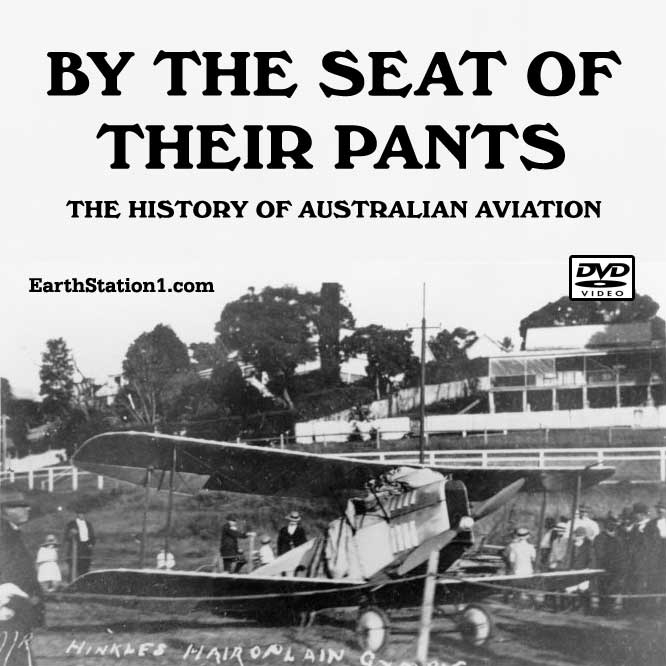
November 16, 1920: Aviation: The History
Of Aviation: The History Of Civil Aviation: The History Of
Australian Civil Aviation: -- Qantas, Australia's national
airline, is founded as Queensland and Northern Territory Aerial
Services Limited. Now known as Qantas Airways Limited, it is the
flag carrier of Australia and the country's largest airline by
fleet size, international flights, and international destinations.
It is the world's third-oldest airline still in operation. It
began international passenger flights in May 1935. Qantas is an
acronym of the airline's original name, Queensland and Northern
Territory Aerial Services, as it originally served Queensland and
the Northern Territory, and is popularly nicknamed "The
Flying Kangaroo". Qantas is a founding member of the Oneworld
airline alliance. The airline is based in the Sydney suburb of
Mascot, adjacent to its main hub at Sydney Airport. As of March
2014, Qantas had a 65 per cent share of the Australian domestic
market and carried 14.9 per cent of all passengers travelling into
and out of Australia. Various subsidiary airlines operate to
regional centres and on some trunk routes within Australia under
the QantasLink banner. Qantas also owns Jetstar, a low-cost
airline that operates both international services from Australia
and domestic services within Australia and New Zealand; and holds
stakes in a number of other Jetstar-branded airlines. On Sale @
15% Off Discount Till Midnight PT!
https://store.earthstation1.com/by-the-seat-of-their-pants-australian-aviation-history-dvd-mp3-us3.html
Today's
EarthStation1.com 15% Off Commemorative Memorial Title: Between
The Wars TV Documentary Series DVD, Video Download, USB Drive
Today, November 16, 2025
November 16, 1933: Soviet Union-United
States Relations: Pre-World War II Soviet Union-United States
Relations (1917-1939): United States Diplomatic Recognition Of The
Soviet Union: -- President Franklin D. Roosevelt announces the
U.S. and Soviet Union have resumed diplomatic relations, suspended
since 1919. The relations between the United States of America and
the Union Of Soviet Socialist Republics (1922-1991) succeeded the
previous relations between the Russian Empire and the United
States from 1776 to 1917 and precede today's relations between the
Russian Federation and the United States that began in 1992. Full
diplomatic relations between both countries were established in
1933, late due to the countries' mutual hostility. During World
War II, both countries were briefly allies. At the end of the war,
the first signs of post-war mistrust and hostility began to appear
between the two countries, escalating into the Cold War; a period
of tense hostile relations, with periods of detente. By 1933, old
fears of Communist threats had faded, and the American business
community, as well as newspaper editors, were calling for
diplomatic recognition. The business community was eager for
large-scale trade with the Soviet Union. The US government hoped
for some repayment on the old tsarist debts, and a promise not to
support subversive movements inside the U.S. President Franklin D.
Roosevelt took the initiative, with the assistance of his close
friend and advisor Henry Morgenthau, Jr. and Russian expert
William Bullitt, bypassing the State Department. Roosevelt
commissioned a survey of public opinion, which at the time meant
asking 1100 newspaper editors; 63 percent favored recognition of
the USSR and 27 percent were opposed. Roosevelt met personally
with Catholic leaders to overcome their objections. He invited
Foreign Minister Maxim Litvinov to Washington for a series of
high-level meetings in November 1933. He and Roosevelt agreed on
issues of religious freedom for Americans working in the Soviet
Union. The USSR promised not to interfere in internal American
affairs, and to ensure that no organization in the USSR was
working to hurt the U.S. or overthrow its government by force.
Both sides agreed to postpone the debt question to a later date.
Roosevelt thereupon announced an agreement on resumption of normal
relations. There were few complaints about the move. However,
there was no progress on the debt issue, and little additional
trade. Historians Justus D. Doenecke and Mark A. Stoler note that,
"Both nations were soon disillusioned by the accord."
Many American businessmen expected a bonus in terms of large-scale
trade, but it never materialized. Roosevelt named William Bullitt
as ambassador from 1933 to 1936. Bullitt arrived in Moscow with
high hopes for Soviet-American relations, his view of the Soviet
leadership soured on closer inspection. By the end of his tenure,
Bullitt was openly hostile to the Soviet government. He remained
an outspoken anti-communist for the rest of his life. On Sale @
15% Off Discount Till Midnight PT!
https://store.earthstation1.com/between-the-wars-dvd-set-all-16-tv-shows-4-discs164.html
Today's
EarthStation1.com 15% Off Commemorative Memorial Title: The Hippie
Temptation (1967) w/ Harry Reasoner MP4 Video Download DVD
Today, November 16, 2025
November 16, 1938: The History Of
Medicine: The History Of Pharmaceuticals: -- Swiss scientist
Albert Hofmann first synthesizes LSD from ergotamine at the Sandoz
Laboratories in Basel. On April 16, 1943, Hofmann accidentally
discovered the hallucinogenic effects of the research drug LSD he
synthesized from lysergic acid, a chemical from the fungus ergot.
He intentionally takes the drug three days later on April 19. In
the 1950s, the Central Intelligence Agency (CIA) believed that the
drug might be useful for mind control, so they tested it on
people, some without their knowledge, in a program called MKUltra.
LSD was sold as a medication for research purposes under the
trade-name Delysid in the 1950s and 1960s. It was listed as a
schedule 1 controlled substance by the United Nations in 1971. It
currently has no approved medical use. In Europe, as of 2011, the
typical cost of a dose was between 4.50 - 25 Euros. Lysergic acid
diethylamide (LSD), also known as acid, is a hallucinogenic drug.
Effects typically include altered thoughts, feelings, and
awareness of one's surroundings. Many users see or hear things
that do not exist. Dilated pupils, increased blood pressure, and
increased body temperature are typical. Effects typically begin
within half an hour and can last for up to 12 hours. It is used
mainly as a recreational drug and as an entheogen
(consciousness-altering drug) for spiritual reasons. LSD does not
appear to be addictive, although tolerance may occur with use of
increasing doses. Adverse psychiatric reactions are possible, such
as anxiety, paranoia, and delusions. Distressing flashbacks might
occur in spite of no further use, a condition called hallucinogen
persisting perception disorder. Death is very rare as a result of
LSD, though it occasionally occurs in accidents. The effects of
LSD are believed to occur as a result of alterations in the
serotonin system. As little as 20 micrograms can produce an
effect. In pure form, LSD is clear or white in color, has no
smell, and is crystalline. It breaks down with exposure to
ultraviolet light. About 10 percent of people in the United States
have used LSD at some point in their lives as of 2017, while 0.7
percent have used it in the last year. It was most popular in the
1960s to 1980s. LSD is typically either swallowed or held under
the tongue. It is most often sold on blotter paper and less
commonly as tablets or in gelatin squares. There is no known
treatment for addiction, if it occurs. Albert Hofmann (January 11,
1906 - April 29, 2008) was a Swiss scientist who, besides LSD, was
also the first person to isolate, synthesize, and name the
principal psychedelic mushroom compounds psilocybin and psilocin.
He authored more than 100 scientific articles and numerous books,
including LSD: Mein Sorgenkind (LSD: My Problem Child). In 2007,
he shared first place with Tim Berners-Lee in a list of the 100
greatest living geniuses, published by The Daily Telegraph
newspaper. On Sale @ 15% Off Discount Till Midnight PT!
https://store.earthstation1.com/the-hippie-temptation-dvd-1967-harry-reasoner-cbs-tv-documen1967.html
Today's
EarthStation1.com 15% Off Commemorative Memorial Title: The Last
Chapter: The End Of Jewish Life In Poland DVD, MP4, USB Drive
Today, November 16, 2025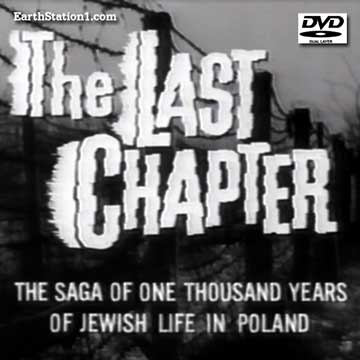
November 16, 1940: The European Civil
War: World War II: The Second European War (The European Theater
Of World War II): The Holocaust (Shoah): The Holocaust In Poland:
The Warsaw Ghetto (German: Warschauer Ghetto, Judischer Wohnbezirk
In Warschau ["Jewish Residential District In Warsaw]; Polish:
Getto Warszawskie [The Warsaw Ghetto]): -- In occupied Poland, the
Nazis close off the Warsaw Ghetto from the outside world. The
Warsaw Ghetto (German: Warschauer Ghetto, officially Judischer
Wohnbezirk in Warschau, "Jewish Residential District in
Warsaw"; Polish: Getto Warszawskie) was the largest of all
the Jewish ghettos in German-occupied Europe during World War II.
It was established by the German authorities in November 1940;
within the new General Government territory of German-occupied
Poland. Over 400,000 Jews were imprisoned there, in an area of 3.4
km2 (1.3 sq mi), with an average of 9.2 persons per room, barely
subsisting on meager food rations. From the Warsaw Ghetto, Jews
were deported to Nazi concentration camps and mass-killing
centers. In the summer of 1942 at least 254,000 Ghetto residents
were sent to the Treblinka extermination camp during Grossaktion
Warschau under the guise of "resettlement in the East"
over the course of the summer. The ghetto was demolished by the
Germans in May 1943 after the Warsaw Ghetto Uprisings which had
temporarily halted the deportations. The total death toll among
the Jewish inhabitants of the Ghetto is estimated to be at least
300,000 killed by bullet or gas, combined with 92,000 victims of
rampant hunger and hunger-related diseases, the Warsaw Ghetto
Uprising, and the casualties of the final destruction of the
Ghetto. On Sale @ 15% Off Discount Till Midnight PT!
https://store.earthstation1.com/the-last-chapter-the-end-of-jewish-life-in-poland-dvd-mp3-us3.html
Today's
EarthStation1.com 15% Off Commemorative Memorial Title: The
Wonders Of Ellora: John Seely's Travels In India DVD MP4 USB
Today, November 16, 2025
November 16, 1945: The United Nations:
The History Of The United Nations: United Nations Specialized
Agencies: The United Nations Educational, Scientific And Cultural
Organization (UNESCO) (French: Organisation Des Nations Unies Pour
L'Education, La Science Et La Culture): -- UNESCO, a specialised
agency of the United Nations (UN) aimed at promoting world peace
and security through international cooperation in education, the
sciences, and culture, is founded. It has 193 member states and 11
associate members, as well as partners in the nongovernmental,
intergovernmental, and private sector. Headquartered in Paris,
France, UNESCO has 53 regional field offices and 199 national
commissions that facilitate its global mandate. UNESCO was founded
in 1945 as the successor to the League Of Nations' International
Committee on Intellectual Cooperation. Its constitution
establishes the agency's goals, governing structure, and operating
framework. UNESCO's founding mission, which was shaped by the
Second World War, is to advance peace, sustainable development and
human rights by facilitating collaboration and dialogue among
nations. It pursues this objective through five major program
areas: education, natural sciences, social/human sciences, culture
and communication/information. UNESCO sponsors projects that
improve literacy, provide technical training and education,
advance science, protect independent media and press freedom,
preserve regional and cultural history, and promote cultural
diversity. As a focal point for world culture and science,
UNESCO's activities have broadened over the years to include
assisting in the translating and disseminating of world
literature, establishing international cooperation agreements to
secure World Heritage Sites of cultural and natural importance,
defending human rights, bridging the worldwide digital divide, and
creating inclusive knowledge societies through information and
communication. UNESCO has launched several initiatives and global
movements, such as Education For All, to further advance its core
objectives. UNESCO is governed by the General Conference, composed
of member states and associate members, which meets biannually to
set the agency's programmes and the budget. It also elects members
of the Executive Board, which manages UNESCO's work, and appoints
every four years the Director-General, who serves as UNESCO's
chief administrator. UNESCO is a member of the United Nations
Development Group, a coalition of UN agencies and organisations
aimed at fulfilling the Sustainable Development Goals. On Sale @
15% Off Discount Till Midnight PT!
https://store.earthstation1.com/the-wonders-of-ellora-john-seely-in-india-dvd.html
Today's
EarthStation1.com 15% Off Commemorative Memorial Title: Black
Stars In Orbit: The Black Astronauts Of NASA MP4 Download Or DVD
Today, November 16, 2025
November 16, 1950: #BOTD: #HBD! Irene D.
Long, Chief Of NASA's Medical And Environmental Health Office,
NASA's first minority, first black and first female Chief Medical
Officer (d. August 4, 2020) is #born to Andrew and Heloweise Davis
Duhart in Cleveland, Ohio, the second of two children; her older
brother Ricky was her best friend. Dr. Irene Duhart Long had long
been fascinated by the reports of space program she watched on
television. At the age of nine, she told her parents she was going
to have a career in aerospace medicine. She graduated from East
High School in Cleveland, and in 1973, she received her bachelor's
degree in biology from Northwestern University. In 1977, Long
received her medical degree from the Saint Louis University School
of Medicine followed by residencies at the Cleveland Clinic, Mt.
Sinai Hospital in Cleveland, Ohio, and Wright State University in
Dayton, Ohio, as the second civilian to enter the Wright State
University School of Medicine's aerospace medicine program, and
where she received her Masters of Science degree in aerospace
medicine. Long published a research paper in 1982 regarding
sickle-cell anemia, a genetic disease affecting the red blood
cells. Her paper went over the potential dangers of flying towards
those with the sickle-cell trait, due to the lower amounts of
oxygen levels at higher altitudes. This research ultimately helped
reassure people with sickle-cell trait that flying would do no
harm. In 1982, Long fulfilled her childhood dream by joining NASA
as a physician, becoming a part of the medical staff at NASA's
Kennedy Space Center, eventually being chosen as the first
African-American woman heading the Occupational Medicine and
Environmental Health Office. She went with her friend, Astronaut
Mae Jemison, to meet Nichelle Nichols, star of Star Trek: The
Original Series (TOS) as Lieutenant Uhura of the USS Enterprise,
at an Orlando Star Trek Convention, who invited them both onstage
and introduced them to the audience, in part as an example of
black and female particiption in NASA, Nichols being at that time
a greatly successful NASA Space Shuttle Program Recruitment
Officer for women and black astronauts. Long thereafter
contributed to the creation of the Spaceflight and Life Sciences
Training Program in 1985 which encourages women and minority
college students to learn about space physiology. Notably, she was
the medical officer on duty Jan. 28, 1986, the day of the space
shuttle Challenger disaster. In 1994, she was appointed director
of the Biomedical Operations and Research Office at the Kennedy
Space Center. In 2000, she was appointed as Chief Medical Officer
and associate director of Spaceport Services, along with being the
first minority women to achieve the civilian equivalent of a
general's rank at Kennedy Space Center. She retired at the age of
63 and David Tipton assumed the duties as Chief Medical Officer in
2013. She worked for NASA for 31 years. Director Hortense Diggs.
"She was Kennedy's first 'Hidden Figure.'" As the first
female and the first minority to hold the position of chief
medical officer at NASA's Kennedy Space Center in Florida, Long
was one of the foremost women who advocated for the inclusion of
minorities at her place of work. One of her accomplishments
includes the creation of Spaceflight and Life Sciences Training
Program in partnership with Florida Agricultural and Mechanical
University (FAMU) aimed at encouraging women and minority college
students to explore careers in science. A Kennedy Employee
Assistance Counselor, Patricia Bell, said about her "One of
the admirable qualities of Irene Long was her inclusion mentality
regarding women in the workplace.... She was a front runner in
advocating for women." She once said "There's a saying
that to know where you're going, you must know where you've been;
I think it's just as important to say, to succeed and prosper in
the present, you must know where you're headed." Irene D.
Long died aged 69 in Florida. Her remains were cremated at Baldwin
Brothers Funeral & Cremation Society in Florida; the final
disposition of her ashes are not publicly disclosed. On Sale @ 15%
Off Discount Till Midnight PT!
https://store.earthstation1.com/black-stars-in-orbit-the-black-astronauts-of-nasa-mp4-download-or-dvd.html
Today's
EarthStation1.com 15% Off Commemorative Memorial Title: Bad Blood:
The Tuskegee Syphilis Experiment DVD, MP4, USB Drive
Today, November 16, 2025
November 16, 1972: Health Disasters In
The United States: Human Subject Research In The United States:
Racism: Anti-Black Racism In The United States: Race And Health In
The United States: The Tuskegee Syphilis Study (The Tuskegee Study
Of Untreated Syphilis In The Negro Male, The Tuskegee Experiment):
-- The Tuskegee Syphilis Experiment is terminated as a result of
the story by Jean Heller of the Associated Press that was printed
on July 25, 1972 in The Washington Star, which became front-page
news in the New York Times the following day. As an immediate
result of those reports, Senator Edward Kennedy called
Congressional hearings, at which Buxtun and HEW officials
testified. As a result of public outcry, the CDC and PHS appointed
an ad hoc advisory panel to review the study.The panel found that
the men agreed to certain terms of the experiment, such as
examination and treatment. However, they were not informed of the
study's actual purpose. The panel then determined that the study
was medically unjustified and ordered its termination. In 1974, as
part of the settlement of a class action lawsuit filed by the
NAACP on behalf of study participants and their descendants, the
U.S. government paid 10M USD (51.8M USD in 2019) and agreed to
provide free medical treatment to surviving participants and
surviving family members infected as a consequence of the study.
Congress created a commission empowered to write regulations to
deter such abuses from occurring in the future. A collection of
materials compiled to investigate the study is held at the
National Library of Medicine in Bethesda, Maryland. The Tuskegee
Study Of Untreated Syphilis In The Negro Male (informally referred
to as the Tuskegee Experiment or Tuskegee Syphilis Study) was a
study conducted between 1932 and 1972 by the United States Public
Health Service (PHS) and the Centers for Disease Control and
Prevention (CDC) on a group of nearly 400 African Americans with
syphilis. The purpose of the study was to observe the effects of
the disease when untreated, though by the end of the study medical
advancements meant it was entirely treatable. The men were not
informed of the nature of the experiment, and more than 100 died
as a result. The Public Health Service started the study in 1932
in collaboration with Tuskegee University (then the Tuskegee
Institute), a historically Black college in Alabama. In the study,
investigators enrolled a total of 600 impoverished African
American sharecroppers from Macon County, Alabama. Of these men,
399 had latent syphilis, with a control group of 201 men who were
not infected. As an incentive for participation in the study, the
men were promised free medical care. While the men were provided
with both medical and mental care that they otherwise would not
have received, they were deceived by the PHS, who never informed
them of their syphilis diagnosis and provided disguised placebos,
ineffective methods, and diagnostic procedures as treatment for
"bad blood". The men were initially told that the
experiment was only going to last six months, but it was extended
to 40 years. After funding for treatment was lost, the study was
continued without informing the men that they would never be
treated. None of the infected men were treated with penicillin
despite the fact that, by 1947, the antibiotic was widely
available and had become the standard treatment for syphilis. The
study continued, under numerous Public Health Service supervisors,
until 1972, when a leak to the press resulted in its termination
on November 16 of that year. By then, 28 patients had died
directly from syphilis, 100 died from complications related to
syphilis, 40 of the patients' wives were infected with syphilis,
and 19 children were born with congenital syphilis. The 40-year
Tuskegee Study was a major violation of ethical standards, and has
been cited as "arguably the most infamous biomedical research
study in U.S. history." Its revelation led to the 1979
Belmont Report and to the establishment of the Office for Human
Research Protections (OHRP) and federal laws and regulations
requiring institutional review boards for the protection of human
subjects in studies. The OHRP manages this responsibility within
the United States Department of Health and Human Services (HHS).
Its revelation has also been an important cause of distrust in
medical science and the US government amongst African Americans.
On May 16, 1997, President Bill Clinton formally apologized on
behalf of the United States to victims of the study, calling it
shameful and racist. "What was done cannot be undone, but we
can end the silence," he said. "We can stop turning our
heads away. We can look at you in the eye, and finally say, on
behalf of the American people, what the United States government
did was shameful and I am sorry." On Sale @ 15% Off Discount
Till Midnight PT!
https://store.earthstation1.com/bad-blood-the-tuskeegee-syphilis-experiment-dvd-mp4-us4.html
Today's
EarthStation1.com #OnThisDay Commemorative Memorial Title:
Remember When: Page One Print Journalism w/ Dick Cavett DVD, MP4,
USB
Today, November 16, 2025 November 16: Have A Party With Your Bear
Day: -- Did you know that it has been 120 years since the first
toy teddy bear was created? The real meaning of Have a Party With
Your Bear Day is questionable. It might either be the obvious one
of having a party with a toy teddy bear or maybe 'bear' here has a
metaphorical meaning. Or something very different; a real bear
perhaps. For simplicity's sake, let's consider this day a day to
have a party with your teddy bear. It is a well-known fact that
the term teddy was named after President Theodore Roosevelt, who
was fondly called Teddy. But the story of how this name came into
existence is not widely known. It is said that one fine day,
Theodore Roosevelt went hunting with governor Andrew H. Longino
near the Mississippi. Some men from President Theodore Roosevelt's
team were hunting a big black bear. After many hours, which
involved a dramatic chase with the hounds, the men finally caught
the bear and tied it to a willow tree. President Roosevelt was
asked to take the final shot and mark the end of the hunt. But
President Theodore was a man of honor. He believed that it would
not be fair, as he had not made any serious contribution to its
capture. Hence, he refused to kill the bear and instead asked his
men to do it. This news quickly spread across Washington.
Cartoonist Clifford Berryman made a cartoon depicting the scene of
President Roosevelt's hunting expedition. The bear initially was
made exactly like an adult bear, which was later turned into
something a bit cute. Morris Michtom, a candy shop owner in
Brooklyn, saw this cartoon and was inspired to make a soft toy
bear to put up in his shop's window. This quickly drew the
attention of people and soon Michtom opened his toy company where
he sold 'Teddy's Bear.' And thus the teddy bear was born. The
teddy bear is one of the most popular toys among kids all around
the world. It is a symbol of cuteness and affection, and often it
is used as a gift exchange between lovers. The teddy bear has had
a great impact on movies and culture. Many cartoon characters
based on the teddy bear were made. Have a Party with Your Bear Day
was created to encourage kids to spend the day with their teddies
and have a good time.
https://store.earthstation1.com/remember-when-page-one-dvd-journalism-history-dick-cavett.html
November 16: Have A Party With Your Bear
Day: -- Did you know that it has been 120 years since the first
toy teddy bear was created? The real meaning of Have a Party With
Your Bear Day is questionable. It might either be the obvious one
of having a party with a toy teddy bear or maybe 'bear' here has a
metaphorical meaning. Or something very different; a real bear
perhaps. For simplicity's sake, let's consider this day a day to
have a party with your teddy bear. It is a well-known fact that
the term teddy was named after President Theodore Roosevelt, who
was fondly called Teddy. But the story of how this name came into
existence is not widely known. It is said that one fine day,
Theodore Roosevelt went hunting with governor Andrew H. Longino
near the Mississippi. Some men from President Theodore Roosevelt's
team were hunting a big black bear. After many hours, which
involved a dramatic chase with the hounds, the men finally caught
the bear and tied it to a willow tree. President Roosevelt was
asked to take the final shot and mark the end of the hunt. But
President Theodore was a man of honor. He believed that it would
not be fair, as he had not made any serious contribution to its
capture. Hence, he refused to kill the bear and instead asked his
men to do it. This news quickly spread across Washington.
Cartoonist Clifford Berryman made a cartoon depicting the scene of
President Roosevelt's hunting expedition. The bear initially was
made exactly like an adult bear, which was later turned into
something a bit cute. Morris Michtom, a candy shop owner in
Brooklyn, saw this cartoon and was inspired to make a soft toy
bear to put up in his shop's window. This quickly drew the
attention of people and soon Michtom opened his toy company where
he sold 'Teddy's Bear.' And thus the teddy bear was born. The
teddy bear is one of the most popular toys among kids all around
the world. It is a symbol of cuteness and affection, and often it
is used as a gift exchange between lovers. The teddy bear has had
a great impact on movies and culture. Many cartoon characters
based on the teddy bear were made. Have a Party with Your Bear Day
was created to encourage kids to spend the day with their teddies
and have a good time.
https://store.earthstation1.com/remember-when-page-one-dvd-journalism-history-dick-cavett.html
Today's
EarthStation1.com #OnThisDay Commemorative Memorial Title: Benny
Goodman's Camel Caravan Swing School Radio MP3 CD, Download, USB
Today, November 16, 2025November 16: National Clarinet Day: -- If
you're an aficionado of music, this day is for you. Do you know
that it has been 3,000 years since the first hornpipes were
created in Ancient Greece? A clarinet is similar to a single-reed
instrument and is a blowing-type musical instrument with a
cylindrical body and a flared bell at the bottom. It is a musical
instrument widely used in bands and orchestras, especially in the
military. It comes from the family of woodwind instruments.
Clarinet Day was created to give credit to this amazing instrument
that is a favorite among most musicians around the world. There
are many theories as to how the clarinet came into existence. It
is said that the clarinet evolved from the ancient woodwind
instrument named 'chalumeau.' The chalumeau is also said to be the
ancestor of the instrument 'oboe.' Even today, a clarinet's lower
register is referred to as chalumeau. The first clarinet is said
to have been developed in the 1700s by German musician Johann
Christoph Denner. It was made in the key of C. Clarinets today are
usually made in the key of B flat. Other modifications in the
clarinet followed in the 1800s. For example, the mouthpiece was
made to face backward, instead of the front, which gave
clarinetists the ability to play the instrument more smoothly.
This prototype was brought forward by German musician Heinrich
Baermann. Later on, thirteen keys were added to the clarinet,
giving the clarinetists the ability to play the chromatic scale.
Thereafter, many new versions and types of clarinets emerged
depending on the key used, the size, or the range of registers.
The clarinet was used as the voice for the wolf in the famous
composition "Peter and the Wolf." The clarinet produces
soothing music, which is why it finds use in different genres of
music such as rock, jazz, and folkloric. It is said that Mozart
loved the sound of clarinets. Clarinets are also used widely in
the military orchestra. Clarinet Day was created to give
recognition to this marvelous instrument that is a favorite
amongst musicians around the world.
https://store.earthstation1.com/benny-goodman39s-camel-caravan-swing-school-old-time-radio-mp3393.html
Today's
EarthStation1.com #OnThisDay Commemorative Memorial Title:
Automobile Accident & Drivers Education Films DVD, Download,
USB Drive
Today, November 16, 2025November 16: International Check Your
Wipers Day: -- An annual reminder before the holiday season to
check their windshield wipers regularly to ensure optimum
visibility in the event of inclement weather on the road.
According to the FHWA, about 21% of all accidents in the United
States are weather-related. As travelers plan for road trips, it's
important to remind them to proactively check their wipers.
Visibility is an important factor in driving in poor weather
conditions like rain, snow and ice. A survey by MICHELIN Wiper
Blades found that 92% of drivers agree that poor wiper blades can
affect their driving ability. However, 90% of drivers do not plan
the time to check their wipers properly and 55%+ don't know how to
check their wiper blades properly. On International Check Your
Wipers Day, ensure your family's driving ability and safety by
checking the windshield wipers on all your cars. Great reminders
on when to check your wipers include: During an oil change; When
you fill gas; After a car wash; Before a road trip; At the start
of winter and spring seasons. Add checking your wipers to your
maintenance checklist. When you celebrate, be sure to use
#CheckYourWipersDay on social media! Standard recommendations
suggest we change our wiper blades every 6 to 12 months. However,
the frequency varies depending on the location of residence and
how often the vehicle is driven. This requires people to regularly
inspect their wipers to ensure that they are not past the
lifespan, which leads to compromised visibility.
https://store.earthstation1.com/automobile-accident-and-drivers-ed-films-3-dual-layer-dvd-se3.html
Today's
EarthStation1.com #OnThisDay Commemorative Memorial Title:
Theatre-Five Radio Drama Series MP3 Set DVD, Download, USB Drive
Today, November 16, 2025November 16: National Button Day: -- Once
simply ornamental in nature, the button as a means to fasten
clothes has been around since 13th century Germany. Since then, a
wide variety of materials like wood, clay, shells, and plastic
have been used to make buttons in every size, shape, and color. A
button jar can morph into a great craft project, extra game
tokens, or fashion embellishment. Sure, we have zippers and Velcro
now, but buttons are just more fun, interesting, and whimsical --
could you imagine Velcro down the front of your elegant blouse? Of
course not!. Buttons can even be works of art, so today take time
to appreciate those useful, pretty little things! Tiny, versatile,
and often overlooked, these little things hold the power to fasten
together style, memories, and even the occasional wardrobe
malfunction. The appeal of buttons is clear. They come in every
shape, color and style, from pearly white shirt buttons, to ornate
Victorian affairs, to cute fastenings shaped like insects and
animals. Any outfit can be updated by adding the right buttons,
and sewing them on is one of the easiest types of needlework to
learn. And they don't just belong near buttonholes, either.
Clusters of buttons can be used to decorate almost everything, and
even on their own in jars they are delightful to handle, play with
and admire. Some collect them, but most just lose them.
Regardless, nearly everyone seems to love them, or at least regard
them with fascination. In case you may be thinking that buttons do
not deserve their own holiday, try to imagine what life would be
like without them! The National Button Society, founded in 1938,
established National Button Day as a celebration for all who
enjoyed collecting and crafting with buttons. Ever since then,
National Button Day has been celebrated every year on November
16th.
https://store.earthstation1.com/theater-five-mp3-dvd-complete-old-time-radio-serie3.html
Today's
EarthStation1.com #OnThisDay Commemorative Memorial Title: Malcolm
X Speeches & Broadcasts 23 Hr MP3 Set CD, Download, USB Drive
Today, November 16, 2025November 16: National Black Marketers
Day: -- Celebrates the achievements of Black marketers in America
and marks the role Black culture played in influencing the
marketing industry. The Black Marketers Coalition (B.M.C.) created
this holiday, and they often organize events during the week
leading up to it, such as fun networking and happy hour parties.
Aside from the festivities, the Black Marketers Coalition also
hosts monthly chats with industry insiders. They discuss trending
topics with black marketers and their allies, sharing knowledge
and learning from each other. Marketing is an essential ingredient
to the success of companies in advertising, client engagement, and
building lasting relationships. Yet the efforts and achievements
of marketers sometimes go unrecognized, a problem, especially for
Black marketers. With this in mind, the Black Marketers Coalition
(B.M.C.) was founded in 2019 in Atlanta, Georgia. The goal of the
B.M.C. was to support black marketers countrywide, in and outside
the workplace. The B.M.C. tapped into a pool of over 500 Black
marketers and their allies in the U.S by promoting Black people
for jobs and prioritizing solid relationships over business.
Sequoyah Glenn, the B.M.C. founder, started her career in the
marketing industry as a fan service coordinator for the
Jacksonville Jaguars. A lack of representation, lack of guidance
from her peers, and even inequity in wages and delegation of
duties frustrated her ambitions. Glenn noticed that Black
businesses and Black marketers were approached - or not approached
- differently compared to other companies. Glenn's frustrations
and observations drove her toward starting a consultancy that
supports black businesses and businesses that want to reach Black,
diverse, or underrepresented customers. One of Glenn's biggest
inspirations in founding the B.M.C. was businessman John H.
Johnson, the founder of Johnson Publishing Company, the first
Black media company in America, which gave Black marketers a start
in the industry. Johnson Publishing Company produced "Ebony"
and "Jet." For decades, these publications chronicled
Black culture, fashion, music, politics, and more. Johnson left
his mark on the industry, and his vision still lives on even after
his passing in 2005. In the spirit of celebrating Black influence
in media and marketing, National Black Marketers Day was created.
https://store.earthstation1.com/malcolm-x-mp3-dvd-speeches-amp-broadcasts-23-ho323.html
Today's
EarthStation1.com #OnThisDay Commemorative Memorial Title: The Ten
Year Lunch: Wit And Legend Of The Algonquin MP4 Download DVD
Today, November 16, 2025( #JCKaelin here: The only time I ever
saw anything I had anything to do with displayed on the Time
Square Building was when I was walking through precisely the
location George S. Kaufman said he never wanted to be so far from
that he couldn't get back there by midnight. At the end of August
2008, I looked up at that building as I walked through the
intersection of Broadway and 44th Street and saw an animated ad
that said "Budweiser Remembers World War II". I laughed
and said to myself outloud "Yeah, 'Budweiser Remembers World
War II", huh? What do you remember about that?" -- and
then I saw it was an ad for the premiere of Ken Burns' documentary
series THE WAR. And then I stopped laughing ;) .) =========
November 16, 1889: #BOTD: #HBD! George S. Kaufman, American
theatre director, producer, humorist, drama critic and playwright
(d. June 2, 1961) is #born into a Jewish family in Pittsburgh,
Pennsylvania. George Simon Kaufman was a member of the Algonquin
Round Table, a famous circle of writers and show business people.
In addition to comedies and political satire, he wrote several
musicals for the Marx Brothers and others. He won the Pulitzer
Prize for Drama for the musical Of Thee I Sing (with Morrie
Ryskind and Ira Gershwin) in 1932, and won again in 1937 for the
play You Can't Take It with You (with Moss Hart). He also won the
Tony Award for Best Director in 1951 for the musical Guys and
Dolls. Despite his claim that he knew nothing about music and
hated it in the theatre, Kaufman collaborated on many musical
theatre projects. His most successful of such efforts include two
Broadway shows crafted for the Marx Brothers, The Cocoanuts,
written with Irving Berlin, and Animal Crackers, written with
Morrie Ryskind, Bert Kalmar, and Harry Ruby. According to
Charlotte Chandler, "By the time Animal Crackers opened ...
the Marx Brothers were becoming famous enough to interest
Hollywood. Paramount signed them to a contract". Kaufman was
one of the writers who excelled in writing intelligent nonsense
for Groucho Marx, a process that was collaborative, given
Groucho's skills at expanding upon the scripted material. Though
the Marx Brothers were notoriously critical of their writers,
Groucho and Harpo Marx expressed admiration and gratitude towards
Kaufman. Dick Cavett, introducing Groucho onstage at Carnegie Hall
in 1972, told the audience that Groucho considered Kaufman to be
"his god". George S. Kaufman died of unspecified causes
in New York City at the age of 71. His remains were cremated, and
his ashes were scattered at a publicly undisclosed place, though
it is suspected that, as he once said "I never want to go any
place where I can't get back to Broadway and 44th by midnight",
that his ashes were scattered somewhere in that vicinity.
https://store.earthstation1.com/the-ten-year-lunch-wit-and-legend-of-algonquin-round-table-dvd.html
Today's
EarthStation1.com #OnThisDay Commemorative Memorial Title: Red
Ball Express 1952 Jeff Chandler Sidney Poitier DVD, MP4, USB Drive
Today, November 16, 2025November 16, 1944: The European Civil
War: World War II: The Second European War (The European Theater
Of World War II): The Western Front Of World War II: The
Liberation Of France: Operation Overlord (The Battle Of Normandy,
The Normandy Campaign): The Siegfried Line Campaign (The Pursuit
To The Rhine, The Allied Advance From Paris To The Rhine, The
Liberation Of Western Europe): The Red Ball Express: -- The famed
truck convoy system that supplied Allied forces moving quickly
through Europe after breaking out from the D-Day beaches in
Normandy known as The Red Ball Express ceases operations after
having fulfilled its misson in an 83-day operation. The Red Ball
Express was created to expedite cargo shipment to the front. Their
trucks were emblazoned with red balls and followed a similarly
marked route that was closed to civilian traffic. Their trucks
also had priority on regular roads. Conceived in an urgent 36-hour
meeting, the convoy system began operating on August 25, 1944.
Staffed primarily with African American soldiers, the Express at
its peak operated 5,958 vehicles that carried about 12,500 tons of
supplies a day. It ran for nearly three months until port
facilities at Antwerp, Belgium, were opened, enough French rail
lines were repaired, and portable gasoline pipelines were
deployed.
https://store.earthstation1.com/red-ball-express-dvd-1952-jeff-chandler-sidney-poi1952.html
Today's
EarthStation1.com #OnThisDay Commemorative Memorial Title: Combat
America (1945) Clark Cable + Bonus B-17 Doc DVD, MP4, USB Drive
Today, November 16, 2025November 16, 1960: #DOTD: #RIP: Clark
Gable, often referred to as "The King Of Hollywood" or
just simply as "The King", American actor, singer, film
director, film producer and soldier (b. February 1, 1901) #dies at
the age of 59 from a heart attack caused by an infection, the
second heart attack in nine days. Medical staff did not perform
cardiopulmonary resuscitation for fear that the procedure would
rupture Gable's heart, and a defibrillator was not available.
Gable is interred in the Great Mausoleum, Memorial Terrace, at
Glendale's Forest Lawn Memorial Park next to Carole Lombard and
her mother. An honor guard and pallbearers Spencer Tracy and James
Stewart were in attendance. Twenty-two years later his fifth and
final wife Kay Gable died and was interred there as well. He was
born William Clark Gable in Cadiz, Ohio. He began his career as a
stage actor and appeared as an extra in silent films between 1924
and 1926, and progressed to supporting roles with a few films for
Metro-Goldwyn-Mayer in 1931. The next year, he landed his first
leading Hollywood role and over the next three decades he became a
leading man in more than 60 motion pictures. Gable won an Academy
Award for Best Actor for It Happened One Night (1934), and was
nominated for leading roles in Mutiny on the Bounty (1935) and for
his best-known role as Rhett Butler in the epic Civil War drama
Gone With The Wind (1939). Gable also found success commercially
and critically with films such as Red Dust (1932), Manhattan
Melodrama (1934), San Francisco (1936), Saratoga (1937) Boom Town
(1940), The Hucksters (1947), Homecoming (1948), and The Misfits
(1961), which was his final screen appearance. Gable appeared
opposite some of the most popular actresses of the time. Joan
Crawford was his favorite actress to work with, and she was
partnered with Gable in eight films. Myrna Loy worked with him
seven times, and he was paired with Jean Harlow in six
productions. He also starred with Lana Turner in four features,
and with Norma Shearer and Ava Gardner in three each. Gable's
final film, The Misfits (1961), united him with Marilyn Monroe
(also in her last completed screen appearance). Gable is
considered one of the most consistent box-office performers in
history, appearing on Quigley Publishing's annual Top Ten Money
Making Stars Poll 16 times. He was named the seventh-greatest male
star of classic American cinema by the American Film Institute.
https://store.earthstation1.com/combat-america-1945-clark-gable-8th-usaaf-wwi19458.html
Today's
EarthStation1.com #OnThisDay Commemorative Memorial Title: Fyodor
Mikhailovich Dostoyevsky DVD, Video Download, USB Flash Drive
Today, November 16, 2025November 16, 1849: Literature: The
History Of Literature: The History Of Russian Literature: The
Death Sentence Of Fyodor Dostoyevsky: -- Fyodor Dostoyevsky is
sentenced to death by a Russian court for anti-government
activities linked to the radical intellectual group the
Petrashevsky Circle, founded by Mikhail Petrashevsky, who had
proposed social reforms in Russia. Mikhail Bakunin once wrote to
Alexander Herzen that the group was "the most innocent and
harmless company" and its members were "systematic
opponents of all revolutionary goals and means".
Nevertheless, the members of the Petrashevsky Circle were
denounced to Ivan Petrovich, a Russian secret service officer and
official at the Ministry of Internal Affairs. Dostoyevsky and his
fellow "conspirators" were arrested at the request of
Count A. Orlov and Tsar Nicolas I, who feared a revolution like
the Decembrist revolt of 1825 in Russia and the Revolutions of
1848 in Europe. The members were held in the well-defended Peter
and Paul Fortress, which housed the most dangerous convicts. The
case was discussed for four months by an investigative commission
headed by the Tsar, with Adjutant General Ivan Nabokov, senator
Prince Pavel Gagarin, Prince Vasili Dolgorukov, General Yakov
Rostovtsev and General Leonty Dubelt, head of the secret police.
They sentenced the members of the circle to death by firing squad,
and the prisoners were taken away to face execution to Semyonov
Place in St Petersburg on 23 December 1849. The execution was
stayed at the last moment when a cart delivered a letter from the
Tsar commuting the sentence. Dostoevsky instead served four years
of exile with hard labour at a katorga prison camp in Omsk,
Siberia, followed by a term of compulsory military service.
https://store.earthstation1.com/fyodor-mikhailovich-dostoyevsky-dvd-literature-documentary.html
Today's
EarthStation1.com #OnThisDay Commemorative Memorial Title:
Apartheid Documentaries Collection DVD, Video Download, USB Drive
Today, November 16, 2025November 16, 1989: South Africa: The
History Of South Africa: Segregation: Racial Segregation:
Apartheid (Racial Segregation In South Africa): The Separate
Amenities Act (The Separate Amenities Act, Act No 49 Of 1953; The
Reservation Of Separate Amenities Act, 1953): -- South African
President F.W. de Klerk announces the abandonment of The Separate
Amenities Act, thus opening the country's beaches to all races. He
further announced that some other public places, including
libraries and parks, would be desegregated soon. ''It has been
decided that all beaches will henceforth be accessible to all
members of the public,'' he said. His declaration did not affect
the legal segregation of schools, hospitals and neighborhoods. Mr.
de Klerk, speaking in Cape Town, said that the Separate Amenities
Act, which permits municipal officials to segregate public
facilities by race, would be repealed as soon as possible. The
law, enacted 36 years prior, has been used to bar nonwhites from
parks, swimming pools, civic centers, libraries and public
transportation. But enforcement had been increasingly lax in major
cities like Johannesburg, which had recently integrated its bus
system. The Government told the police to stop arresting violators
and to issue citations instead. The law is still enforced in some
rural towns. ''The time has arrived to repeal this act,'' Mr. de
Klerk said. ''The Government has decided to do so as soon as
possible.'' Mr. de Klerk announced the changes in Cape Town at a
meeting of the President's Council, which advised him on policy
matters. Excerpts of his remarks were distributed by the South
African Press Association. The president's plans did not affect
two other cornerstones of apartheid: the Population Registration
Act, which identifies South Africans by race from birth, and the
Group Areas Act, which enforces residential segregation. Hospitals
also remained segregated, although some ostensibly white urban
hospitals had admitted black patients on an unofficial basis. The
Government had recognized some urban areas that had been
integrated illegally. In ordering all beaches desegregated, Mr. de
Klerk asked local authorities to amend their laws ''without any
delay.'' Many beaches, including those in the city of Cape Town,
had already been quietly integrated. The prior August, an attempt
by blacks led by Archbishop Desmond M. Tutu, the Anglican primate
of southern Africa, and other anti-apartheid leaders to use two
whites-only beaches outside Cape Town ended in a violent
confrontation with riot police. The officers cordoned off areas
with barbed wire, buzzed over picnickers in a helicopter and at
one point fired tear gas. The incident embarrassed Mr. de Klerk,
who had promised a gradual movement away from apartheid. A
subsequent attempt by blacks to use the beaches proceeded without
incident, as did a ''beach-in'' in Durban. The President described
the new measures as consistent with ''our stated goal to eliminate
discrimination.'' When he became leader of the ruling National
Party in February, Mr. de Klerk proclaimed in a speech that white
minority domination, ''insofar as it exists,'' would have to end.
But he added that it could not be replaced by domination by the
black majority. He had permitted mass marches against apartheid to
proceed unhindered in several cities, and he released eight
prominent political prisoners the prior month.
https://store.earthstation1.com/apartheid-documentaries-dvd-racial-segregation-in-south-africa.html
Today's
EarthStation1.com #OnThisDay Commemorative Memorial Title: Air
Power WWII TV Series With Walter Cronkite DVD, Video Download, USB
Today, November 16, 2025November 15-16/November 16-17, 1940: The
European Civil War: World War II: The Second European War (The
European Theater Of World War II): Aviation: Military Aviation:
Air Warfare Of World War II: Strategic Bombing During World War
II: European Air Operations During The Battle Of Europe: The
Bombing Of Hamburg In World War II: The Hamburg Air Raids Of The
Nights Of November 15/16 And November 16/17 1940: -- In response
to the leveling of Coventry by the German Luftwaffe two days
before during what became known as The Coventry Blitz, the Royal
Air Force's Bomber Command executes two major bombing raids
against Hamburg on the consecutive nights of November 15-16, 1940
and November 16-17, 1940. Over 200 British aircraft were involved.
On the first night damage was caused to the Blohm & Voss
shipyard, and over 60 fires were started. On the second night only
60 aircraft found their target and damage was far less. The damage
and loss of life inflicted were far less than that inflicted by
the Germans upon Conventry on November 14-15, 1940, when Coventry
was heavily bombed by 515 German Luftwaffe bombers from Luftflotte
3 and from the pathfinders of Kampfgruppe 100 during the overnight
of November 14-15. Coventry Cathedral is almost completely
destroyed. The Coventry Blitz (blitz: from the German word
Blitzkrieg meaning "lightning war") was a series of
bombing raids that took place on the English city of Coventry. The
city was bombed many times during the Second World War by the
German Air Force (Luftwaffe). The most devastating of these
attacks occurred on the evening of November 14, 1940 and continued
into the morning of November 15. In one night, more than 4,300
homes in Coventry were destroyed and around two-thirds of the
city's buildings were damaged. The raid was heavily concentrated
on the city centre, most of which was destroyed. Two hospitals,
two churches and a police station were also damaged. The local
police force lost no fewer than nine constables or messengers in
the blitz. Approximately one third of the city's factories were
completely destroyed or severely damaged, another third were badly
damaged, and the rest suffered slight damage. Among the destroyed
factories were the main Daimler factory, the Humber Hillman
factory, the Alfred Herbert Ltd machine tool works, nine aircraft
factories, and two naval ordnance stores. However, the effects on
war production were only temporary, as much essential war
production had already been moved to 'shadow factories' on the
city outskirts. Also, many of the damaged factories were quickly
repaired and had recovered to full production within a few months.
An estimated 568 people were killed in the raid (the exact figure
was never precisely confirmed), with another 863 badly injured and
393 sustaining lesser injuries. Given the intensity of the raid,
casualties were limited by the fact that a large number of
Coventrians "trekked" out of the city at night to sleep
in nearby towns or villages following the earlier air raids. Also,
people who took to air raid shelters suffered very little death or
injury. Out of 79 public air raid shelters holding 33,000 people,
very few had been destroyed. The attack, code-named Operation
Mondscheinsonate (German: Operation Moonlight Sonata), inflicted
considerable damage to monuments and residential areas. The
initial wave of 13 specially modified Heinkel He 111 aircraft of
Kampfgruppe 100, which were equipped with X-Gerat (German:
X-Device) navigational devices, accurately dropped navigational
marker flares at 19:20. The British and the Germans were fighting
the Battle of the Beams and on this night the British failed to
disrupt the X-Gerat signals. The Battle of the Beams was a period
early in the Second World War when bombers of the German Air Force
(Luftwaffe) used a number of increasingly accurate systems of
radio navigation for night bombing in the United Kingdom. British
scientific intelligence at the Air Ministry fought back with a
variety of their own increasingly effective means, involving
jamming and distortion of the radio waves. The period ended when
the Wehrmacht moved their forces to the East in May 1941, in
preparation for the attack on the Soviet Union. The first wave of
follow-up bombers dropped high explosive bombs, knocking out the
utilities (the water supply, electricity network, telephones and
gas mains) and cratering the roads, making it difficult for the
fire engines to reach fires started by the later waves of bombers.
These later waves dropped a combination of high explosive and
incendiary bombs. There were two types of incendiary bomb: Those
made of magnesium and those made of petroleum. The high explosive
bombs and the larger air-mines not only hindered the Coventry fire
brigade, they were also intended to damage roofs, making it easier
for the incendiary bombs to fall into buildings and ignite them.
Coventry's air defences consisted of twenty-four 3.7 inch AA guns
and twelve 40 mm Bofors. The AA Defence Commander of 95th
(Birmingham) Heavy Anti-Aircraft Regiment, Royal Artillery, had
prepared a series of concentrations to be fired using
sound-locators and GL Mk. I gun-laying radar, and 128
concentrations were fired before the bombing severed all lines of
communication and the noise drowned out sound-location. The
anti-aircraft batteries then fought on in isolation. Some gun
positions were able to fire at searchlight beam intersections,
glimpsed through the smoke and guessing the range. Although the
Coventry guns fired 10 rounds a minute for the whole 10 hour raid
(a total of over 6,700 rounds), only one German bomber was shot
down. At around 20:00, Coventry Cathedral (dedicated to Saint
Michael), was set on fire by incendiaries for the first time. The
volunteer firefighters managed to put out the first fire but other
direct hits followed and soon new fires broke out in the
cathedral; accelerated by a firestorm, the flames quickly spread
out of control. During the same period, more than 200 other fires
were started across the city, most of which were concentrated in
the city-centre area, setting the area ablaze and overwhelming the
firefighters. The telephone network was crippled, hampering the
fire service's command and control and making it difficult to send
firefighters to the most dangerous blazes first; as the Germans
had intended, the water mains were damaged by high explosives,
meaning there was not enough water available to tackle many of the
fires. The raid reached its climax around midnight with the final
all clear sounding at 06:15 on the morning of November 15.
Although the city centre suffered the heaviest raids, districts of
the city including Stoke Heath, Foleshill and Wyken were also
heavily bombed. The raid reached such a new and severe level of
destruction that Joseph Goebbels later used the term coventriert
("coventried") when describing similar levels of
destruction of other enemy towns. During the raid, the Germans
dropped about 500 tonnes of high explosives, including 50
parachute air-mines, of which 20 were incendiary petroleum mines,
and 36,000 incendiary bombs. The raid of November 14, combined
several innovations which influenced all future strategic bomber
raids during the war. These were: 1) The use of pathfinder
aircraft with electronic aids to navigate, to mark the targets
before the main bomber raid; and 2) The use of high explosive
bombs and air-mines (blockbuster bombs) coupled with thousands of
incendiary bombs intended to set the city ablaze in a firestorm.
In the Allied raids later in the war, 500 or more heavy
four-engine bombers all delivered their 3,000-6,000-pound
(1,400-2,700 kg) bomb loads in a concentrated wave lasting only a
few minutes. But at Coventry, the German twin-engined bombers
carried smaller bomb loads (2,000-4,000 pounds (910-1,810 kg)),
and attacked in smaller multiple waves. Each bomber flew several
sorties over the target, returning to base in France to rearm.
Thus the attack was spread over several hours, and there were
lulls in the raid when firefighters and rescuers could reorganise
and evacuate civilians. As Arthur Harris, commander of RAF Bomber
Command, wrote after the war: "Coventry was adequately
concentrated in point of space [to start a firestorm], but all the
same there was little concentration in point of time." The
British used the opportunity given them by the attack on Coventry
to try a new tactic against Germany, which was carried out on
December 16, 1940 as part of Operation Abigail Rachel against
Mannheim. The British had been waiting for the opportunity to
experiment with an incendiary-intensive raid, considering it a
kind of retaliation for the German raid on Coventry. This was the
start of a British drift away from precision attacks on military
targets and towards area bombing attacks on whole cities.
https://store.earthstation1.com/air-power-original-1950s-tv-series-walter-cronkite-4-dv19504.html
Today's
EarthStation1.com #OnThisDay Commemorative Memorial Title: Pursuit
To The Rhine The Liberation Of Western Europe MP4 Download DVD
Today, November 16, 2025November 16, 1944: The European Civil
War: World War II: The Second European War (The European Theater
Of World War II): The Western Front Of World War II: The Siegfried
Line Campaign (The Pursuit To The Rhine, The Allied Advance From
Paris To The Rhine, The Liberation Of Western Europe): The Battle
Of Hurtgen Forest (German: Schlacht Im Hurtgenwald): Operation
Queen (The Battle Of Hurtgen Forest Second Phase): -- Between
11:13 and 12:48, Allied bombers conduct massive preliminary
bombings of Operation Queen, an American operation at the German
Siegfried Line. 1,204 heavy bombers of the U.S. 8th Air Force were
launched to attack German municipalities adjacent to the
Belgian-German border, hitting of Eschweiler, Weisweiler and
Langerwehe with 4,120 bombs, while 339 fighter bombers of the U.S.
9th Air Force attacked Hurtgen and Gey with 200 short tons (180 t)
of bombs. At the same time, 467 Handley Page Halifax and Avro
Lancaster heavy bombers attacked Duren and Julich; 180 British
bombers hit Heinsberg. The result of the bombing was mixed. The
German towns hit suffered from severe destruction, with Duren
being destroyed. German communications after the bombing were
heavily impaired, and there was a considerable effect on morale,
especially of units consisting of more younger and inexperienced
troops. However, the direct damage dealt to the German frontline
troops was low, and casualties were few. Allied air commanders
admitted that the bombing did not measure up to expectations.
About 12 aircraft were shot down during the initial bombing by
meager anti-aircraft fire.
https://store.earthstation1.com/pursuit-to-the-rhine-the-liberation-of-western-europe-mp4-download-dv4.html
Today's
EarthStation1.com #OnThisDay Commemorative Memorial Title: Russian
Right Stuff: Soviet Space Program TV Series DVD, Download, USB
Today, November 16, 2025November 16, 1965: Rocket Launches: The
History Of Rocketry: The History Of Spaceflight: The Aftermath Of
World War II: The Cold War: The Space Age: The Space Race: The
Discovery And Exploration Of The Solar System: Space Probes:
Interplanetary Space Probes: The Soviet Space Program: Spacecraft
Missions To Venus: The Venera Program: Venera 3 (Russian: Venus
3): -- The Soviet Union launches the Venera 3 space probe, which
will be the first spacecraft to reach the surface of another
planet, on a mission to Venus at 04:19 UTC atop a Molniya M from
Baikonur Cosmodrome Site 31 (Site 31/6) in Kazakhstan. The Venera
3 space probe comprised an entry probe, designed to enter the
Venus atmosphere and parachute to the surface, and a carrier/flyby
spacecraft, which carried the entry probe to Venus and also served
as a communications relay for the entry probe. The entry body
contained a radio communication system, scientific instruments,
electrical power sources, and medallions bearing the Coat of Arms
of the Soviet Union. The probe was sterilised before launch. The
probe's initial trajectory missed Venus by 60,550km and a course
correction manoeuvre was carried out on December 26, 1965 which
brought the probe onto a collision course with the planet. Contact
with the probe was lost on February 15, 1966 likely due to
overheating. The entry probe crashed on Venus on March 1, 1966,
making Venera 3 the first space probe to reach the surface of
another planet.
https://store.earthstation1.com/russian-right-stuff-dvd-set-space-program-secret-history-2-disc2.html
Today's
EarthStation1.com #OnThisDay Commemorative Memorial Title:
Missions To The Moon: Apollo Program To Moon & Skylab DVD,
MP4, USB
Today, November 16, 2025November 16, 1973: Rocket Launches: The
History Of Rocketry: The History Of Spaceflight: The Aftermath Of
World War II: The Cold War: The Space Age: The Space Race: Space
Programs Of The United States: Human Spaceflight Programs: Space
Stations: Skylab: Skylab 4 (SL-4 and SLM-3) -- NASA launches
Skylab 4 with a crew of three astronauts from Cape Canaveral,
Florida at 14:01:23 UTC atop a Saturn IB launch vehicle from the
Kennedy Space Center Launch Complex 39 (LC-39) on an 84-day
mission, the last of the Skylab missions. On December 28, the
Skylab Mutiny occurred, a day-long mutiny held by the crew of
Skylab 4. The three-man crew, Gerald P. Carr, Edward G. Gibson,
and William R. Pogue, turned off radio communications with NASA
ground control for a full day, spending the day relaxing and
looking at the Earth before resuming communication with NASA. They
refused communications from mission control during this period.
Once communications resumed, there were discussions between the
crew and NASA, and the mission continued for several more weeks
before the crew returned to Earth in 1974. The 84-day mission was
Skylab's last crew, and last time American astronauts set foot in
a space station for two decades, until Shuttle-Mir in the 1990s.
The event has been extensively studied as case study in various
fields of endeavor including space medicine, team management, and
psychology. Man-hours in space was, and continued to be into the
21st century, a profoundly expensive undertaking; a single day on
Skylab was worth about 22.4M USD in 2017. The mutiny also impacted
the planning of future space missions, especially long-term
missions.
https://store.earthstation1.com/missions-to-the-moon-apollo-program-to-moon-skylab-dvd-mp4-us4.html
Today's
EarthStation1.com #OnThisDay Commemorative Memorial Title: The
Search For Extraterrestrial Life And Aliens MP4 Video Download DVD
Today, November 16, 2025November 16, 1974: Astrobiology
(Xenology, Exobiology): SETI (The Search For Extraterrestrial
Intelligence): Interstellar Radio Messages: The Arecibo Message:
-- At a ceremony to mark the remodeling of the Arecibo radio
telescope at Arecibo Observatory in Puerto Rico, the Arecibo
Message is broadcast from Puerto Rico, a 1974 interstellar radio
message carrying basic information about humanity and Earth sent
to globular star cluster M13 (Messier 13), about 25,000 light
years away because M13 was a large and close collection of stars
that was available in the sky at the time and place of the
ceremony. It was meant as a demonstration of human technological
achievement, rather than a real attempt to enter into a
conversation with extraterrestrials. The message was broadcast
into space a single time via frequency modulated (FM) radio waves.
The message forms an image shown when translated into graphics,
characters, and spaces. Due to uncertainty over the remaining
strength of cables supporting the suspended structure of the
Arecibo dish in the aftermath of Hurricane Maria in 2017 and
earthquakes in 2019 and 2020, and the risk of collapse owing to
further failures making repairs dangerous, the National Science
Foundation (NSF) announced on November 19, 2020, that the
telescope would be decommissioned and dismantled; however, efore
it could be decommissioned, several of the remaining support
cables suffered a critical failure and the support structure,
antenna, and dome assembly all fell into the dish at 7:55 a.m.
local time on December 1, 2020, destroying the telescope. The NSF
decided in October 2022 that it would not rebuild the telescope or
build a similar observatory at the site.
https://store.earthstation1.com/the-search-for-extraterrestrial-life-and-aliens-mp4-video-download-dvd.html
Today's
EarthStation1.com #OnThisDay Commemorative Memorial Title: The
Story Of Civilization: Will & Ariel Durant DVD, MP3 Download,
USB
Today, November 16, 2025November 16, 42 BC: #BOTD: Tiberius,
Roman emperor from 14 AD to 37 AD, succeeding the tenure of the
Empire's founder, Augustus (d. March 16, 37 AD) is #born Tiberius
Caesar Divi Augusti Filius Augustus in Rome, Italy, Roman Republic
to Tiberius Claudius Nero and Livia Drusilla in a Claudian family,
he was given the personal name Tiberius Claudius Nero. His mother
divorced Nero and married Octavian-later to ascend the Empire as
Augustus-who officially became his stepfather. Tiberius would
later marry Augustus' daughter (from his marriage to Scribonia),
Julia the Elder, and even later be adopted by Augustus. Through
the adoption, he officially became a Julian, assuming the name
Tiberius Julius Caesar. The subsequent emperors after Tiberius
would continue this blended dynasty of both families for the
following thirty years; historians have named it the
Julio-Claudian dynasty. In relations to the other emperors of this
dynasty, Tiberius was the stepson of Augustus, grand-uncle of
Caligula, paternal uncle of Claudius, and great-grand uncle of
Nero. His 22-and-a-half-year reign would be the longest after
Augustus's until Antoninus Pius, who surpassed his reign by a few
months in 161. Tiberius was one of the greatest Roman generals;
his conquest of Pannonia, Dalmatia, Raetia, and temporarily, parts
of Germania, laid the foundations for the northern frontier. Even
so, he came to be remembered as a dark, reclusive and sombre ruler
who never really desired to be emperor; Pliny the Elder called him
"the gloomiest of men." After the death of his son
Drusus Julius Caesar in 23 AD, Tiberius became more reclusive and
aloof. In 26 AD he removed himself from Rome and left
administration largely in the hands of his unscrupulous Praetorian
prefects Lucius Aelius Sejanus and Quintus Naevius Sutorius Macro.
Tiberius died in Misenum, Italy, Roman Empire aged 77. He was
succeeded by his grand-nephew and adopted grandson, Caligula.
Tacitus relates that the emperor appeared to have stopped
breathing, and that Caligula, who was at Tiberius' villa, was
being congratulated on his succession to the empire, when news
arrived that the emperor had revived and was recovering his
faculties. Those who had moments before recognized Caligula as
Augustus fled in fear of the emperor's wrath, while Macro took
advantage of the chaos to have Tiberius smothered with his own
bedclothes. Suetonius reports several rumours, including that the
emperor had been poisoned by Caligula, starved, and smothered with
a pillow; that recovering, and finding himself deserted by his
attendants, he attempted to rise from his couch, but fell dead.
According to Cassius Dio, Caligula, fearing that the emperor would
recover, refused Tiberius' requests for food, insisting that he
needed warmth, not food; then assisted by Macro, he smothered the
emperor in his bedclothes. After his death, the Senate refused to
vote Tiberius the divine honors that had been paid to Augustus,
and mobs filled the streets yelling "To the Tiber with
Tiberius!"; the bodies of criminals were typically thrown
into the river, instead of being buried or burnt. However, the
emperor was cremated, and his ashes were placed in The Mausoleum
Of Augustus. In his will, Tiberius nominated Caligula and Tiberius
Gemellus as his joint heirs. Caligula's first act on becoming
Princeps was to void Tiberius' will. Tiberius has been represented
in fiction, in literature, film and television, and in video
games, often as a peripheral character in the central storyline.
One such modern representation is in the novel I, Claudius by
Robert Graves, and the consequent BBC television series
adaptation, where he is portrayed by George Baker.
https://store.earthstation1.com/story-of-civilization-will-amp-ariel-durant-mp3-dvd-11-audiobo311.html
Today's
EarthStation1.com #OnThisDay Commemorative Memorial Title:
America: The Second Century Documentary Series DVD, Download, USB
Today, November 16, 2025November 16, 1836: #BOTD: #HBD! Kalakaua
Of Hawaii, sometimes called The Merrie Monarch, the last king and
penultimate monarch of the Kingdom Of Hawai'i, reigning from
February 12, 1874, until his death (d. January 20, 1891) is #born
David La'amea Kamananakapu Mahinulani Naloiaehuokalani Lumialani
Kalakaua at 2:00 a.m. to Caesar Kaluaiku Kapa_akea and Analea
Keohokalole in the grass hut compound belonging to his maternal
grandfather 'Aikanaka, at the base of Punchbowl Crater in Honolulu
on the island of O'ahu. Succeeding King Lunalilo, he was elected
to the vacant throne of Hawai'i against the former Queen Emma.
Kalakaua had a convivial personality and enjoyed entertaining
guests with his singing and ukulele playing. At his coronation and
his birthday jubilee, the hula dance, which had hitherto been
banned in public in the kingdom, became a celebration of Hawaiian
culture. During Kalakaua's reign, the Reciprocity Treaty of 1875
brought great prosperity to the kingdom. Its renewal continued the
prosperity but allowed United States to have exclusive use of
Pearl Harbor. In 1881, Kalakaua took a trip around the world to
encourage the immigration of contract sugar plantation workers. He
wanted Hawaiians to broaden their education beyond their nation.
He instituted a government-financed program to sponsor qualified
students to be sent abroad to further their education. Two of his
projects, the statue of Kamehameha I and the rebuilding of 'Iolani
Palace, were expensive endeavors but are popular tourist
attractions today. Extravagant expenditures and Kalakaua's plans
for a Polynesian confederation played into the hands of
annexationists who were already working towards a United States
takeover of Hawai'i. In 1887, Kalakaua was pressured to sign a new
constitution that made the monarchy little more than a figurehead
position. After his brother William Pitt Leleiohoku II died in
1877, the king named their sister Lili'uokalani as heir-apparent.
She acted as regent during his absences from the country. Kalakaua
died aged 54 in San Francisco, California at 2:35 pm of Bright's
Disease (inflammation of the kidneys). After a state funeral in
California and a second one in Honolulu, the king's remains were
buried in the Royal Mausoleum at Mauna 'Ala on February 15, 1891.
In a ceremony officiated by his sister Lili'uokalani, the last
monarch of Hawai'i, on June 24, 1910, his remains, and those of
his family, were transferred to the underground Kalakaua Crypt
after the main mausoleum building had been converted into a
chapel.
https://store.earthstation1.com/america-the-second-century-us-2nd-100-years-history-621006.html
Today's
EarthStation1.com #OnThisDay Commemorative Memorial Title: The Joe
Pyne Show TV Talk Show Collection MP4 Video Download DVD
Today, November 16, 2025November 16, 2012: #DOTD: #RIP: James W.
Moseley, American observer, author, publisher and commentator on
the subject of unidentified flying objects as a ufologist, critic
and hoaxster, best known as the publisher of the UFO newsletters
Saucer News and its successor Saucer Smear, which became the
longest continuously published UFO journal in the world (b. August
4,1931) #dies from cancer of the esophagus at a hospital in Key
West, Florida at the age of 81 years old. His burial details are
not publicly disclosed. James Moseley was born James Willett
Moseley in New York City, the son of U.S. Army Major General
George Van Horn Moseley, chief of the 4th Section (supplies and
evacuation) of General Pershing's Wartime General Staff, and
Florence Barber Moseley (nee DuBois) whose family owned the Barber
Steamship Lines. His parents were married in July 1930, at which
time his father was already 55 years old, and James was born the
following year. His childhood was spent on army bases until his
father's retirement in 1938. James never got along with his
father, taking particular exception to his outspoken racist and
anti-semitic views, including his claims that America must "breed
up" its own decaying population by copying Nazi eugenics
practices, and launch a program of "selective breeding,
sterilization, the elimination of the unfit, and the elimination
of those types which are inimical to the general welfare of the
nation." Over his nearly sixty-year career, James Willett
Moseley exposed UFO hoaxes and engineered hoaxes of his own. James
Moseley was considered by many in the UFO community to be a
skeptic, as Moseley reported that over the years he accepted, then
rejected, a number of explanations for UFOs. He appeared on the
Joe Pyne Show, however, as a sincere believer in UFOs. According
to Jerome Clark, he "entertained just about every view it is
possible to hold about UFOs," and according to Antonio
Huneeus, "Moseley was critical and sarcastic regarding just
about everything and everybody in UFOlogy. Yet Jim did believe a
core of the UFO phenomenon was real and truly unexplained after
filtering out all the hoaxes, conspiracy theories,
mis-identifications and just plain nonsense that pervades much of
the field."
https://store.earthstation1.com/the-joe-pyne-show-dvd-old-time-shock-tv-talk-shows.html
Today's
EarthStation1.com #OnThisDay Commemorative Memorial Title:
Satchmo: Louis Armstrong Biography + Bonus Title DVD MP4 USB Drive
Today, November 16, 2025November 16, 1905: #BOTD: #HBD! Eddie
Condon, American guitarist, banjo player, bandleader, pianist and
singer (d. August 4, 1973) is #born Albert Edwin Condon in
Goodland, Indiana, the son of John and Margaret (nee McGraw)
Condon. A leading figure in Chicago jazz, he also played piano and
sang. He grew up in Momence, Illinois, and Chicago Heights,
Illinois, where he attended St. Agnes and Bloom High School. After
playing ukulele, he switched to banjo and was a professional
musician by 1921. When he was 15 years old, he received his first
union card in Waterloo, Iowa. He was based in Chicago for most of
the 1920s, and played with such jazz notables as Bix Beiderbecke,
Jack Teagarden, and Frank Teschemacher. He and Red McKenzie formed
the Chicago Rhythm Kings in 1925. While in Chicago, Condon and
other white musicians would go to Lincoln Gardens to watch and
learn from King Oliver and his band. They later would frequent the
Sunset Cafe to see Louis Armstrong and his Hot Five for the same
reasons.In 1928, Condon moved to New York City. He frequently
arranged jazz sessions for various record labels, sometimes
playing with the artists he brought to the recording studios,
including Louis Armstrong and Thomas Fats Waller. He organised
racially integrated recording sessions, when these were still
rare, with Waller, Armstrong and Henry 'Red' Allen. He played with
the band of Red Nichols for a time. Later, from 1938 he had a long
association with Milt Gabler's Commodore Records. A handful of
records were issued under his own name: a July 28, 1928 two-song
session was recorded for OKeh, but only issued in England. On
October 30, 1928, an OKeh was issued as "Eddie Condon and his
Footwarmers", featuring Jack Teagarden. A further session on
February 8, 1929 yielded a record issued under the name "Eddie
Hot Shots" and issued on Victor's hot dance series. In 1933,
a further two sessions were recorded for Brunswick consisting of 6
recordings, only 2 of which were released in the US. From 1938 on,
Condon recorded for Commodore and one session for Decca. From the
late 1930s on he was a regular at the Manhattan jazz club Nick's.
The sophisticated variation on Dixieland music which Condon and
his colleagues created there came to be nicknamed "Nicksieland."
By this time, his regular circle of musical associates included
Wild Bill Davison, Bobby Hackett, George Brunies, Edmond Hall, and
Pee Wee Russell. In 1939, he appeared with "Bobby Hacket and
Band" in the Warner Brothers & Vitaphone film musical
short-subject, On the Air. Condon did a series of jazz radio
broadcasts, Eddie Condon's Jazz Concerts, from New York's Town
Hall during 1944-45 which were nationally popular. These
recordings survive, and have been issued on the Jazzology label.
From 1945 through 1967 he ran his own New York jazz club, Eddie
Condon's, first located on West 3rd Street in Greenwich Village,
then 52nd Street near Sixth Avenue, on the present site of the CBS
headquarters building; then later, on the south side of East 56th
Street, east of Second Avenue. In the 1950s Condon recorded a
sequence of classic albums for Columbia Records. The musicians
involved in these albums, and at Condon's club, included Wild Bill
Davison, Bobby Hackett (cornet), Billy Butterfield (trumpet),
Edmond Hall, Peanuts Hucko, Pee Wee Russell, Bob Wilber
(clarinet), Cutty Cutshall, Lou McGarity, George Brunies
(trombone), Bud Freeman (tenor sax), Gene Schroeder, Dick Cary,
Ralph Sutton (piano), Bob Casey, Walter Page, Jack Lesberg, Al
Hall (bass), George Wettling, Buzzy Drootin, Cliff Leeman (drums).
Condon toured Britain in 1957 with a band including Wild Bill
Davison, Cutty Cutshall, Gene Schroeder and George Wettling. His
last tour was in 1964, when he took a band to Australia and Japan.
Condon's men, on that tour, were top mainstream jazz musicians:
Buck Clayton (trumpet), Pee Wee Russell (clarinet), Vic Dickenson
(trombone), Bud Freeman (tenor sax), Dick Cary (piano and alto
horn), Jack Lesberg (bass), Cliff Leeman (drums), Jimmy Rushing
(vocals). Billy Banks, a vocalist who had recorded with Condon and
Pee Wee Russell in 1932, and had lived in obscurity in Japan for
many years, turned up at one of the 1964 concerts: Pee Wee asked
him "have you got any more gigs?". In 1948, Condon's
autobiography We Called It Music was published. Eddie Condon's
Treasury of Jazz (1956) was a collection of articles co-edited by
Condon and Richard Gehman. A latter-day collaborator, clarinetist
Kenny Davern, described a Condon gig: "It was always a thrill
to get a call from Eddie and with a gig involved even more so. I
remember eating beforehand with Bernie (Previn, trumpet) and Lou
(McGarity, trombone) and everyone being in good spirits. There was
a buzz on, we'd all had a taste and there was a great feel to the
music." Condon toured and appeared at jazz festivals until
1971. Condon married fashion copywriter Phyllis Smith in 1942.
They had two daughters. On August 4, 1973, Condon died of a bone
disease at Mount Sinai Hospital in New York City, New York. He was
67. He was survived by his wife and two daughters. He is buried
beside his wife Phylllis at Christ Church Episcopal Graveyard in
Shrewsbury, New Jersey.
https://store.earthstation1.com/satchmo-louis-armstrong-biography-dvd-mp4-usb-driv4.html
Today's
EarthStation1.com #OnThisDay Commemorative Memorial Title: Color
Adjustment 40 Years Of Black America On Broadcast TV DVD MP4 USB
Today, November 16, 2025November 16, 1967: #BOTD: #HBD! Lisa
Bonet, African Jewish American actress of film, television and
music videos, and beauty, is born Lisa Michelle Bonet in San
Francisco, California to Arlene Joyce Litman, a schoolteacher of
Jewish descent, and Allen Bonet, an opera singer of
African-American heritage from Texas. In 1993, she legally changed
her name to Lilakoi Moon, although she still uses the name Lisa
Bonet professionally. She portrayed Denise Huxtable on the sitcom
The Cosby Show (1984-1992), for which she earned widespread
acclaim and a nomination for the Primetime Emmy Award for
Outstanding Supporting Actress in a Comedy Series in 1986; she
reprised the role of Denise in the spinoff series A Different
World (1987-1993). She also appeared in the psychological horror
film Angel Heart (1987), which earned her a nomination for the
Saturn Award for Best Supporting Actress. Bonet has starred in the
action thriller film Enemy of the State (1998), the comedy-drama
film High Fidelity (2000), the action drama film Biker Boyz (2003)
and the thriller film Road to Paloma (2013). She has sporadically
worked in TV acting, appearing in roles such as Maya Daniels in
Life on Mars (2008-2009) and Marisol on Ray Donovan (2016). From
1987 to 1993, Bonet was married to singer, songwriter and
guitarist Lenny Kravitz, with whom she had one child, Zoe, who is
also an actress. In 2017, she married actor Jason Momoa, with whom
she has two children. Bonet and Momoa separated in January 2022.
https://store.earthstation1.com/color-adjustment-40-years-of-black-americans-on-tv-dvd-download-u40.html
Today's
EarthStation1.com #OnThisDay Commemorative Memorial Title: Andy
Warhol (1987) Documentary Mel Melvyn Bragg MP4 Video Download DVD
Today, November 16, 2025November 16, 1971: #DOTD: #RIP: Edie
Sedgwick, American actress, fashion model and beauty, known for
being one of Andy Warhol's superstars, known as "The Girl Of
The Year" in 1965 after starring in several of Warhol's short
films in the 1960s, dubbed an "It Girl", and named by
Vogue magazine a "Youthquaker", likely inspiration of
Bob Dylan's song "Like A Rolling Stone" as well as other
of his songs (b. April 20, 1943) #dies in Santa Barbara,
California, aged 28. The coroner ruled her death as
"undetermined/accident/suicide". Her death certificate
states the immediate cause was "probable acute barbiturate
intoxication" due to ethanol intoxication. Sedgwick's alcohol
level was registered at 0.17%, and her barbiturate level was 0.48
mg%. In the summer of 1970, Sedgwick had met Michael Post, who was
a fellow patient at the psychiatric ward of the Santa Barbara
Cottage Hospital, at which both were hospitalized for drug abuse
treatment. They married on July 24, 1971. During this time she
gave up drugs and alcohol, but four months later in October 1971,
she relapsed after taking prescription pain medication given to
her for a physical illness, which in turn led to abusing
barbiturates and alcohol. Edie Sedgwick was not buried in her
family's Sedgwick Pie cemetery plot but in the small Oak Hill
Cemetery in Ballard, California. Her epitaph reads "Edith
Sedgwick Post - Wife Of Michael Brett Post 1943-1971". Edith
Minturn Sedgwick Post was born Edith Minturn Sedgwick in Santa
Barbara, California, the seventh of eight children of Alice Delano
de Forest (1908-1988) and Francis Minturn Sedgwick (1904-1967), a
rancher and sculptor. She is a member of the historical Sedgwick
family of Massachusetts, and is the first cousin once removed of
fellow actress and beauty Kyra Sedgwick. Sedgwick relationship
with Andy Warhol deteriorated by late 1965, and Sedgwick demanded
that Warhol stop showing her films. After breaking with Andy
Warhol and the inner circle of his studio The Factory, Sedgwick
began living at the Chelsea Hotel, where she became close to Bob
Dylan. Dylan and his friends eventually convinced Sedgwick to sign
up with Albert Grossman, Dylan's manager. According to Paul
Morrissey, Sedgwick had developed a crush on Dylan that she
thought he reciprocated. She was also under the impression that
she and Dylan would star in a mainstream film together.
Unbeknownst to Sedgwick, Dylan had secretly married his girlfriend
Sara Lownds in November 1965. Morrissey claimed that Sedgwick was
informed of the marriage by Warhol (who reportedly heard about it
through his lawyer) in February 1966. Friends of Sedgwick's later
said that she saw the supposed offer of doing a film with Dylan as
a ticket to a mainstream film career. Paul Morrissey claimed that
Dylan likely never had plans to star in a film with Sedgwick, and
Dylan "hadn't been very truthful." Since Sedgwick's
death, Bob Dylan has routinely denied that he ever had a romantic
relationship with her, but did acknowledge knowing her. In
December 2006, several weeks before the release of the
controversial film 2006 Factory Girl about Sedgwick's rapid rise
and fall, the Weinstein Company and the film's producers
interviewed Sedgwick's older brother, Jonathan, who said that
Sedgwick told him she had aborted a baby she claimed was Dylan's.
Jonathan Sedgwick claimed that Edie had the abortion soon after
she was injured in a motorcycle accident. As a result of the
accident, doctors consigned her to a mental hospital where she was
treated for drug addiction. Despite this account, no hospital
records or Sedgwick family records exist to support this story.
Nonetheless, Sedgwick's brother also claimed "Staff found she
was pregnant but, fearing the baby had been damaged by her drug
use and anorexia, forced her to have the abortion." The Bob
Dylan song "Like a Rolling Stone" is reportly inspired
by her; his songs "Just Like a Woman", "Leopard-Skin
Pill-Box Hat" and "Fourth Time Around" from his
1966 album Blonde On Blonde are also reportedly about her. The
Velvet Underground's "Femme Fatale" from their 1967
album The Velvet Underground & Nico was certainly written
about her. Though her mental health deteriorated from her drug
abuse, she continued to struggle to complete the
semi-autobiographical film Ciao! Manhattan, completing filming in
early 1971. The film was released postumously in July 1972.
https://store.earthstation1.com/anwa1domelme.html